<?xml version="1.0" encoding="UTF-8"?><feed xmlns="http://www.w3.org/2005/Atom" xmlns:dc="http://purl.org/dc/elements/1.1/">
                                        <id>https://www.feudunord.com/blog</id>
                                            <link rel="self" href="https://www.feudunord.com/blog"></link>
                                <title><![CDATA[Blog]]></title>
                                                                                                                <updated>2025-11-26T16:49:05+00:00</updated>
                        
            <entry>
            <title><![CDATA[The Missing 82%: Why Traditional Deal Sourcing is Failing Private Equity Acquirers.]]></title>
            <link rel="alternate" href="https://www.feudunord.com/blog/private-equity-2/the-missing-82-why-traditional-deal-sourcing-is-failing-private-equity-acquirers" />
            <id>https://www.feudunord.com/blog/private-equity-2/the-missing-82-why-traditional-deal-sourcing-is-failing-private-equity-acquirers</id>
            <author>
                <name><![CDATA[Manuel Alinque]]></name>
                                    <email><![CDATA[manuel.alinque@gmail.com]]></email>
                            </author>
            <summary type="html">
                <![CDATA[<p style="font-size: 20px; text-align: justify;"><span style="font-family: Raleway; font-size: 20px;">A recurring challenge defines modern M&amp;A: <strong>scarcity of quality deals</strong> and <strong>record-high valuations</strong>. However, industry data suggests the problem isn't scarcity; it's <strong>sourcing failure</strong>.</span></p>
<p style="font-size: 20px;"> </p>
<h2 style="font-size: 20px;"><span style="font-family: Raleway; font-size: 34px; color: #169179;">1. The Problem: An Invisible Market of 82%</span></h2>
<p> </p>
<p style="text-align: justify;" data-path-to-node="7"><span style="font-family: Raleway; font-size: 20px;">According to industry reports (*) the average Private Equity firm covers a staggering <strong>17.6% of its relevant target market</strong>. Even firms in the top quartile struggle, reaching only 27.5%. </span><span style="font-family: Raleway; font-size: 20px;">This means the median firm is functionally blind to <strong>over 82% of the companies</strong> that would perfectly match its investment mandate and thesis.</span></p>
<p data-path-to-node="9"> </p>
<p style="text-align: justify;" data-path-to-node="9"><span style="font-family: Raleway; font-size: 20px;">Why does this vast, relevant market remain invisible? The answer lies in the over-reliance on <strong>reactive, transactional sourcing</strong>—primarily auction processes led by investment banks. While essential for certain deals, this model inevitably funnels firms toward highly competitive situations, driving up multiples and eroding potential profitability.</span></p>
<p style="text-align: justify;" data-path-to-node="9"> </p>
<h2 style="text-align: justify;" data-path-to-node="9"><span style="font-family: Raleway; font-size: 34px; color: #169179;">2. The Tweak: Shifting to Proactive, Peer-to-Peer Sourcing</span></h2>
<p style="text-align: justify;" data-path-to-node="12"> </p>
<p style="text-align: justify;" data-path-to-node="12"><span style="font-family: Raleway; font-size: 20px;">The solution is not more data; it's <strong>smarter engagement</strong>. The sophisticated buyers who succeed in M&amp;A are making a strategic shift away from competitive bidding toward <strong>Proactive, Mandated Buy-Side Sourcing</strong>.</span></p>
<p style="text-align: justify;" data-path-to-node="13"><span style="font-family: Raleway; font-size: 20px;">At <strong>Feu·Du·Nord</strong>, we call this approach the necessary "tweak." It requires moving the M&amp;A conversation out of the transactional sphere and into a <strong>strategic, peer-to-peer dialogue</strong> focused on value creation.</span></p>
<p style="text-align: justify;" data-path-to-node="13"> </p>
<p style="text-align: justify;" data-path-to-node="13"><span style="color: #000000;"><strong><span style="font-family: Raleway; font-size: 20px;">Replacing the Cold Call with Credibility</span></strong></span></p>
<p style="text-align: justify;" data-path-to-node="13"> </p>
<p style="text-align: justify;" data-path-to-node="15"><span style="font-family: Raleway; font-size: 20px;">For a Family-Owned business or a founder CEO, the first contact is critical. A cold call from a large PE fund or a generic broker can often be met with immediate resistance. The crucial shift is replacing this with an <strong>immediate bridge of credibility</strong>. </span></p>
<p style="text-align: justify;" data-path-to-node="15"> </p>
<p style="text-align: justify;" data-path-to-node="15"><span style="font-family: Raleway; font-size: 20px;">Our team is structured to provide this bridge. We have sat on all sides of the M&amp;A table: as <strong>C-level business owners</strong>, <strong>industry peers</strong>, and <strong>operational integration leaders</strong>. This experience allows us to engage targets as strategic equals, not just as capital providers.</span></p>
<p style="text-align: justify;" data-path-to-node="15"> </p>
<h2 style="text-align: justify;" data-path-to-node="15"><span style="font-size: 34px;"><span style="font-family: Raleway; color: #169179;">3. The Feu·Du·Nord Edge: Strategic Alignment and Trust</span></span></h2>
<p style="text-align: justify;" data-path-to-node="15"> </p>
<p data-path-to-node="19"><span style="font-family: Raleway; font-size: 20px;">Our <strong>Proactive Buy-Side Sourcing</strong> methodology, beginning with highly customized M&amp;A Scouting Reports, is built to thrive in that missing 82% of the market.</span></p>
<ol start="1" data-path-to-node="20">
<li>
<p data-path-to-node="20,0,0"><span style="font-family: Raleway; font-size: 20px;"><strong>Strategic Alignment:</strong> We don't present an offer; we present a <strong>Growth Case</strong>. Our deep, fact-based understanding of the target's sector allows us to articulate a compelling vision for the next chapter. This <strong>shared language</strong> addresses the operational and strategic concerns of the owner, not just their valuation demands.</span></p>
</li>
<li>
<p data-path-to-node="20,1,0"><span style="font-family: Raleway; font-size: 20px;"><strong>De-Risking the Investment:</strong> Our reports include elements like the <strong>Integration Readiness Assessment</strong>. By incorporating operational due diligence and synergy mapping into the <em>scouting phase</em>, we help buyers <strong>de-risk the investment</strong> before a Letter of Intent (LOI) is even signed—a crucial tool for CFOs and Corporate Development teams.</span></p>
</li>
<li>
<p data-path-to-node="20,2,0"><span style="font-family: Raleway; font-size: 20px;"><strong>Trust and Proprietary Deal Flow:</strong> This level of trust and strategic depth is the only reliable way to motivate a private owner to open a <strong>confidential, proprietary transaction</strong>. It assures the owner that their <strong>legacy and operations are understood</strong> and prioritized, making the exclusive, off-market deal a secure and appealing option.</span></p>
</li>
</ol>
<p style="text-align: justify;"><span style="font-family: Raleway; font-size: 20px;">To compete in today's M&amp;A landscape, buyers cannot afford to ignore over four-fifths of the market. The next generation of value is being created not in crowded auctions, but through <strong>targeted, peer-to-peer engagement</strong> that unearths the hidden 82%.</span></p>
<p style="text-align: justify;"> </p>
<p style="text-align: justify;"><span style="font-family: Raleway; font-size: 20px;">By adopting this proactive, intelligence-driven <strong>Buy-Side Sourcing</strong> model, firms can transition from market followers to <strong>market definers</strong>, securing superior assets at favorable terms.</span></p>
<p style="text-align: justify;"> </p>
<p> </p>
<h2><span style="font-family: Raleway; color: #169179;">4. How we help</span></h2>
<p> </p>
<h5><span style="color: #169179; font-family: Raleway; font-size: 20px;"><strong>MARKET STRATEGIES</strong></span></h5>
<h5 style="text-align: justify;"><span style="font-family: Raleway; font-size: 20px;">Understanding markets and value creation dynamics is the essence of what we do. We only advise in verticals that we master and we start always by listening carefully to our clients. Our strategy thinking is always precise and fact based, sitting right in the center of the Board Agenda. We help with:</span></h5>
<ul>
<li>
<h5><span style="color: #e67e23; font-family: Raleway; font-size: 20px;"><strong>Strategy checks</strong></span></h5>
</li>
<li>
<h5><span style="color: #e67e23; font-family: Raleway; font-size: 20px;"><strong>Board memberships, OP-Role in Portfolio companies</strong></span></h5>
</li>
<li>
<h5><span style="color: #e67e23; font-family: Raleway; font-size: 20px;"><strong>Strategy Definition</strong></span></h5>
</li>
</ul>
<h5> </h5>
<h5><span style="color: #169179; font-family: Raleway; font-size: 20px;"><strong>FINANCIAL ADVISORY</strong></span></h5>
<h5><span style="font-family: Raleway; font-size: 20px;">Our Financial Advisory do not compare nor substitute accounting or transaction services. We will focus on the strategy of a transaction, the business plan, the scenarios and the valuation of it. We play the role of marking well the yellow road with side red lines for any transaction, making sure of governance and focus if required.</span></h5>
<ul>
<li><span style="font-family: Raleway; font-size: 20px; color: #e67e23;"><strong>M&amp;A Scouting of proprietary deals</strong></span></li>
<li>
<h5><span style="font-family: Raleway; font-size: 20px; color: #e67e23;"><strong>M&amp;A approach, strat &amp; valuation</strong></span></h5>
</li>
<li><span style="font-family: Raleway; font-size: 20px; color: #e67e23;"><strong>Pre-DD Sanity Checks / Risks Preview</strong></span></li>
<li>
<h5><span style="font-family: Raleway; font-size: 20px; color: #e67e23;"><strong>Negotiation guide</strong></span></h5>
</li>
<li>
<h5><span style="font-family: Raleway; font-size: 20px; color: #e67e23;"><strong>Transaction governance</strong></span></h5>
</li>
</ul>
<h5> </h5>
<h5><span style="font-family: Raleway; font-size: 20px; color: #169179;"><strong>INDUSTRIAL PARTNERSHIPS</strong></span></h5>
<h5><span style="font-family: Raleway; font-size: 20px;">Despite difficulties, or precisely because of them, we know how to help on the choice and formation of Strategic Alliances and Joint Ventures, typically for achieving Capital Solutions, Market Reach, or Winning Tenders.</span></h5>
<ul>
<li>
<h5><span style="font-family: Raleway; font-size: 20px; color: #e67e23;"><strong>Strat Alliances guide</strong></span></h5>
</li>
<li>
<h5><span style="font-family: Raleway; font-size: 20px; color: #e67e23;"><strong>Tenders in co-operation</strong></span></h5>
</li>
<li>
<h5><span style="font-family: Raleway; font-size: 20px; color: #e67e23;"><strong>Public-Private Partnerships</strong></span></h5>
</li>
</ul>
<h5> </h5>
<h5><span style="font-family: Raleway; font-size: 20px; color: #169179;"><strong>CO-INVESTMENTS</strong></span></h5>
<p><span style="font-family: Raleway; font-size: 20px;">Whether it is the need of an Operating Partner, Or the unique opportunity to make a Direct co-Investment in a specific club deal. Feu du Nord is the Investor's choice for a guarantee of independence, commitment, purpose and alignment with the expected results.</span></p>
<ul>
<li>
<h5><span style="font-family: Raleway; font-size: 20px; color: #e67e23;"><strong>Operating Partnerships</strong></span></h5>
</li>
<li>
<h5><span style="font-family: Raleway; font-size: 20px; color: #e67e23;"><strong>Direct Co-Investments </strong></span><span style="font-family: Raleway; font-size: 20px; color: #e67e23;"><strong>(Club Deals)</strong></span></h5>
</li>
<li>
<h5><span style="font-family: Raleway; font-size: 20px; color: #e67e23;"><strong>Joint-Ventures </strong></span></h5>
</li>
</ul>
<p> </p>
<p>(*) SPS Origination Report 2024</p>
<p> </p>]]>
            </summary>
                            <link rel="enclosure" href="https://static.ucraft.net/fs/ucraft/userFiles/feudunord/images/a-37-pe-firms-see-only-18-of-relevant-opportunities-17641755506378.png" length="147936" type="image/png" />
                        <category term="PRIVATE EQUITY" />
            <updated>2025-11-26T16:49:05+00:00</updated>
                            <dc:description><![CDATA[Industry data shows Private Equity firms miss up to 82% of relevant targets by relying on reactive, auction-driven sourcing. The solution is a strategic &quot;tweak&quot; towards Proactive Buy-Side Sourcing.]]></dc:description>
                    </entry>
            <entry>
            <title><![CDATA[AI Investments: The Risk of Breaking the Sound Barrier]]></title>
            <link rel="alternate" href="https://www.feudunord.com/blog/strategy-1/ai-investments-the-risk-of-breaking-the-sound-barrier" />
            <id>https://www.feudunord.com/blog/strategy-1/ai-investments-the-risk-of-breaking-the-sound-barrier</id>
            <author>
                <name><![CDATA[Manuel Alinque]]></name>
                                    <email><![CDATA[manuel.alinque@gmail.com]]></email>
                            </author>
            <summary type="html">
                <![CDATA[<h2><span style="color: #169179; font-family: Raleway;">1. The Moment of AI</span></h2>
<p> </p>
<p style="text-align: justify;"><span style="font-family: Raleway; font-size: 20px;"><strong>I</strong>n 2018, I published one of my first articles, and perhaps one of the most widely read and impactful (<span style="color: #169179;"><a style="color: #169179;" href="https://www.linkedin.com/pulse/digital-transformation-productivity-running-away-low-cost-alinque/?trackingId=16NjYo%2BrSLmS9L3zwoSfFw%3D%3D" target="_blank" rel="noopener noreferrer"><strong><em>Digital Transformation and Productivity: Running Away the Low-Cost Mantra</em></strong></a></span>). Seven years ago, digital transformation was not yet visible in the economy's aggregate productivity data, yet it was intuited, based on the correlation with the previous industrial revolution, that evidence of such improvement could not be far off on the near horizon. That same year, 2018, GPT-1 was launched.</span></p>
<p style="text-align: justify;"> </p>
<p style="text-align: justify;"><span style="font-family: Raleway; font-size: 20px;">Today, in 2025, we can say that the effects of digital transformation and AI are now beginning to be seen, tentatively, in labor productivity indicators in sectors such as the American financial and professional services sectors, for example.</span></p>
<p style="text-align: justify;"> </p>
<p style="text-align: justify;"><span style="font-family: Raleway; font-size: 20px;">Easy access to the first levels of AI, its spectacular and immediate applications, and above all, the intuition of an even more spectacular automation potential (limited only by the relative delay of electro-mechanical robotics when compared to the speed of AI development) have generated a boom in its use, its applications, and its future possibilities. Everyone is talking today about AI, and everyone, or almost everyone, claims to "know" about AI, but what are the risks and the key financial considerations when investing on it?</span></p>
<p style="text-align: justify;"> </p>
<p style="text-align: justify;"><span style="font-family: Raleway; font-size: 20px;"><strong>F</strong>or entrepreneurs, managers, board members, and shareholders, the "ambient pressure," so to speak, is enormous. If any CEO were to publicly declare today that they won't invest in AI, he would probably be digging the grave of his/her professional career.</span></p>
<p style="text-align: justify;"> </p>
<p style="text-align: justify;"><span style="font-family: Raleway; font-size: 20px;">And yet, as an elementary school teacher used to remind us in class, "you have to keep a cool head and warm feet“.</span></p>
<p style="text-align: justify;"> </p>
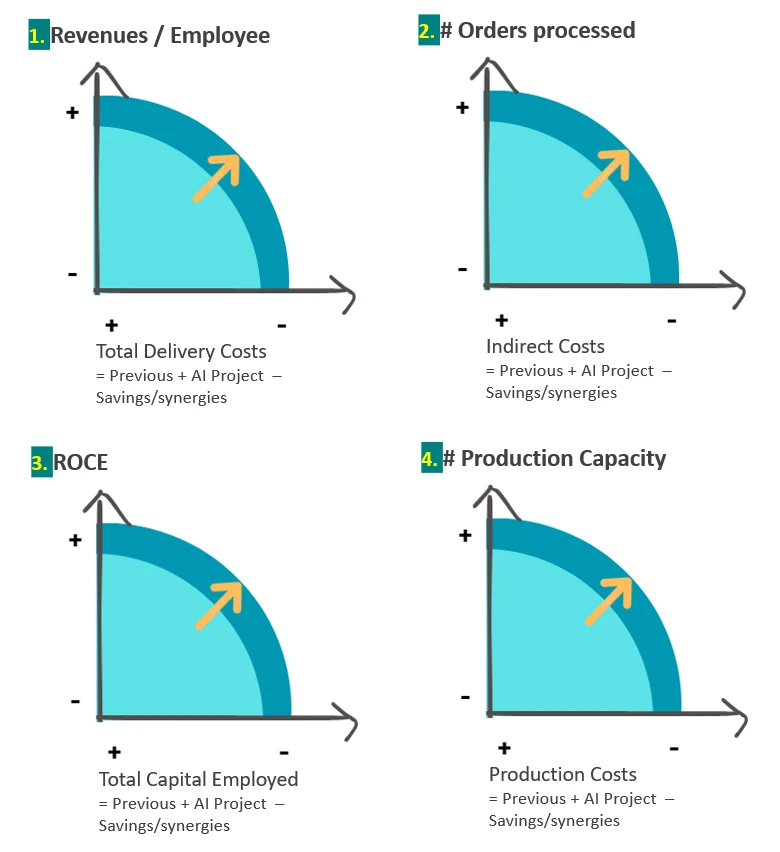
<p style="text-align: justify;"><span style="font-family: Raleway; font-size: 20px;">Of course, "exploring" and "playing" with two pilot projects here and three "proofs of concept" projects there about AI is not only bad, but certainly interesting, both at the level of experience and politically, let's say. It happens, however, that quite a few companies have already moved </span><span style="font-family: Raleway; font-size: 20px;">beyond this stage of, more or less successful, experiments, and today technology providers and even shareholders or private investors are asking for "more AI“.</span></p>
<p style="text-align: justify;"> </p>
<p style="text-align: justify;"><span style="font-family: Raleway; font-size: 20px;">This article is aimed precisely at that situation, when focusing a “serious” investment decision in business AI.</span></p>
<p> </p>
<h5><span style="color: #169179; font-family: Raleway;"><strong>AI - GLOBAL ADOPTION PACE</strong></span></h5>
<p> </p>
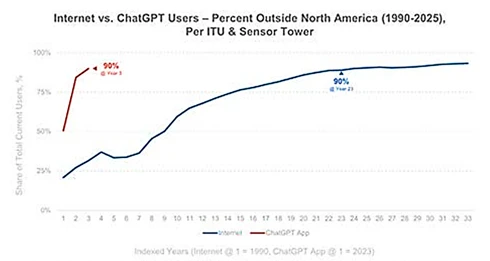
<p><span style="font-family: Raleway;"><strong><span style="font-size: 20px;">Internet adoption reached 90% of users 23 year after creation (<span style="color: #3598db;">in blue</span>)</span></strong></span></p>
<p><span style="font-family: Raleway;"><strong><span style="font-size: 20px;">ChatGPT reached 90% of users in just 3 years (<span style="color: #e03e2d;">in red</span>)</span></strong></span></p>
<p> </p>
<p><strong><span style="font-size: 20px;"><img src="https://static.ucraft.net/fs/ucraft/userFiles/feudunord/uploaded-media/ai-global-adoption-pace-17576801976532.webp" alt="AI-Global Adoption Pace" data-width="0" data-height="0"></img></span></strong></p>
<p><span style="font-family: Raleway; font-size: 14px;"><em>Source: Bond – the AI Economy</em></span></p>
<p> </p>
<h2><span style="color: #169179; font-family: Raleway;">2. A new Obsolescence</span></h2>
<p> </p>
<p style="text-align: justify;"><span style="font-family: Raleway; font-size: 20px;">To illustrate the first concept, I'll use a real, personal analogy. I remember when I got married, back in 2002, we bought a fantastic CRT television, which required four well-muscled arms to move it. I still remember with some pain when, due to social pressure—let's say, "everyone" had a flat-panel TV—and the widespread use of digital platforms, we decided to upgrade to a magnificent 55-inch flat television with 4K OLED technology. That heavy CRT TV had cost us an arm and a leg, and fifteen years later, it was still delivering on its promise and working perfectly... but around it, the world of television content had changed..</span></p>
<p style="text-align: justify;"> </p>
<p style="text-align: justify;"><span style="font-family: Raleway; font-size: 20px;">Back to our case, let's now take into account that, since our beloved Professor Joseph Schumpeter linked technological innovation cycles with the economic cycles, we have seen these cycles gradually shorten, going from industrial revolutions lasting almost a century to technological “eras” lasting just over a decade.</span></p>
<p style="text-align: justify;"><span style="font-family: Raleway; font-size: 20px;">In that period, just over a decade, <strong>SAP</strong> has released one version of HANA per year, with at least three updates in between every year. <strong>Microsoft</strong> has gone from releasing a version of Windows every two years to releasing some variant of it every six months, and some years even at a higher pace. <strong>Apple</strong> has changed its processor about 20 times, and <strong>ChatGPT</strong> has released one version per year since 2018. Without considering the evolution of the market capitalization of companies associated with this AI disruption, such as <strong>NVIDIA</strong>, for example.</span></p>
<p style="text-align: justify;"> </p>
<p style="text-align: justify;"><span style="font-family: Raleway; font-size: 20px;">Technological obsolescence in today's business is no longer necessarily a technical obsolescence, nor even a functional one; it is primarily an economic obsolescence and a matter of productivity relative to your competitors.</span></p>
<p style="text-align: justify;"> </p>
<p style="text-align: justify;"><span style="font-family: Raleway; font-size: 20px;">Hence the emergence and success, coupled with lower costs and increased communications capacity, of all types of services, technological infrastructure, applications, and even business processes in the cloud.</span></p>
<p style="text-align: justify;"> </p>
<p style="text-align: justify;"><span style="font-family: Raleway; font-size: 20px;">"<em>I buy a service, and the provider will take care of renewing and updating it technically</em>“, is the logical thought of every manager in this regard.</span></p>
<h5 style="text-align: justify;"> </h5>
<p style="text-align: justify;"><span style="font-family: Raleway; font-size: 20px;">Except that this is noy always the case, and there are now quite a few cases of "obsolete clouds" that have been forced to accept technical disruption, and usually a significant price increase at the same time.</span></p>
<p style="text-align: justify;"> </p>
<p style="text-align: justify;"><span style="font-family: Raleway; font-size: 20px;">The cloud, whether public or even more so if private, assumes the risk of obsolescence like any other traditional technical architecture.</span></p>
<p style="text-align: justify;"> </p>
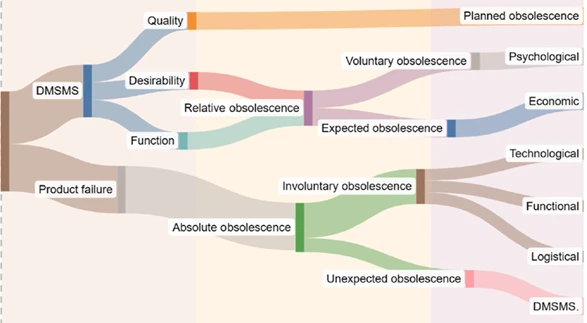
<p style="text-align: justify;"><span style="font-family: Raleway; font-size: 20px;">The first thing we need to do, therefore, when assessing an investment on AI and any other edge technology is the nature of its obsolescence risk, on its various forms; Technical, Functional, Planned or Scheduled, Economical and even Psychological and its possible social externalities.</span></p>
<p style="text-align: justify;"> </p>
<h5><span style="color: #169179; font-family: Raleway;"><strong>OBSOLESCENCE, MORE THAN BEING OLD</strong></span></h5>
<p> </p>
<p><img src="https://static.ucraft.net/fs/ucraft/userFiles/feudunord/uploaded-media/obsolescence-types-17576806585165.webp" alt="Tech/AI Obsolescence types" data-width="0" data-height="0"></img></p>
<p> </p>
<p><span style="font-family: Raleway; font-size: 14px;"><em>Source: L. Sierra-Fontalvo et al.- </em><em>DMSMS: Diminishing of manufacturing sources and material shortages</em></span></p>
<p> </p>
<h2><span style="color: #169179; font-family: Raleway;">3. Breaking the Sound Barrier</span></h2>
<p> </p>
<p style="text-align: justify;"><span style="font-family: Raleway; font-size: 20px;"><strong>A</strong>s is well known, when an aircraft, often a fighter-bomber, flies faster than the sound of its engines, it breaks the sound barrier with a roar for any observer on the ground. The aircraft moves away faster than its own sound.</span></p>
<p style="text-align: justify;"> </p>
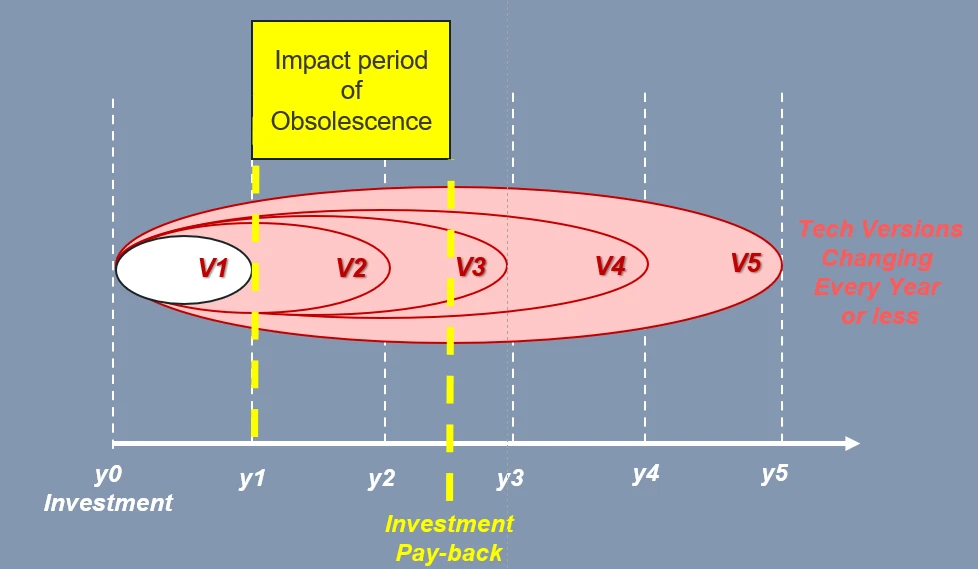
<p style="text-align: justify;"><span style="font-family: Raleway; font-size: 20px;">The rapid evolution and adoption of AI can, like the aircraft, break the barrier, not of sound, of course, but of the payback of the associated investment.</span></p>
<p style="text-align: justify;"> </p>
<p style="text-align: justify;"><span style="font-family: Raleway; font-size: 20px;">In other words, there is a high probability that we will invest in something, some application, integration, service, or automation with AI, whose "payback" will occur long after the technological development has become obsolete.</span></p>
<p style="text-align: justify;"> </p>
<p style="text-align: justify;"><span style="font-family: Raleway; font-size: 20px;">At the exponential rate of evolution of both technological architectures and AI software and algorithms, we will be buying something that, as in the television example, we will have to retire before its technical useful life has ended, and possibly even before we have recovered the investment.</span></p>
<p style="text-align: justify;"> </p>
<h5><span style="color: #169179; font-family: Raleway;"><strong>AI INVESTING: BREAKING THE SOUND BARRIER</strong></span></h5>
<p><strong><span style="font-family: Raleway; font-size: 20px;"><em>“Breaking the Sound Barrier”</em>: AI-Tech changes faster than the Investment pay-back</span></strong></p>
<p> </p>
<p><strong><span style="font-family: Raleway; font-size: 20px;"><img src="https://static.ucraft.net/fs/ucraft/userFiles/feudunord/uploaded-media/ai-investing---breaking-the-sound-barrier-17576809644994.webp" alt="AI Investing Financial Risk: Breaking the sound barrier" width="875" height="509" data-width="875" data-height="509"></img></span></strong></p>
<p><strong><span style="font-family: Raleway; font-size: 20px;"><span style="font-family: Raleway; font-size: 14px;"><em>Source: Feu Du Nord Investments</em></span></span></strong></p>
<h5> </h5>
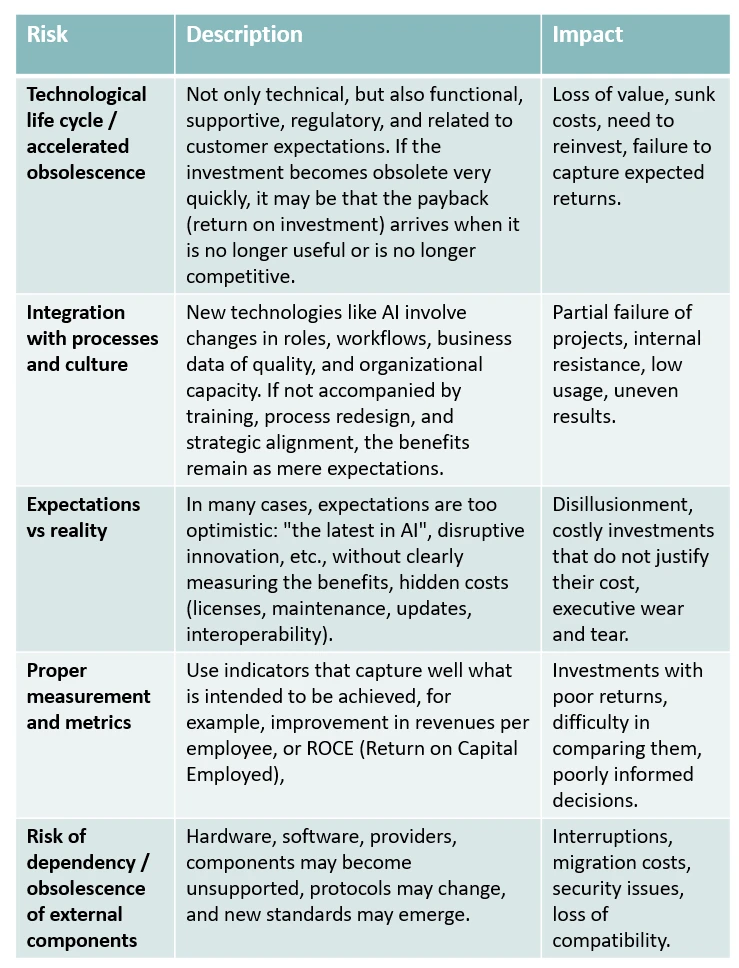
<h5><strong><span style="font-family: Raleway; font-size: 18px; color: #169179;">RISKS AND CRITICAL FACTORS IN AI AND EDGE TECH INVESTMENTS</span></strong></h5>
<p> </p>
<p><strong><span style="font-family: Raleway; font-size: 18px; color: #169179;"><img src="https://static.ucraft.net/fs/ucraft/userFiles/feudunord/uploaded-media/risks-in-ai-investing-summary-17576812888748.webp" alt="Risks and critical factors in AI and Tech Investments" data-width="0" data-height="0"></img></span></strong></p>
<p><span style="color: #000000;"><span style="font-family: Raleway; font-size: 18px;"><span style="font-family: Raleway; font-size: 20px;"><span style="font-family: Raleway; font-size: 14px;"><em>    Source: Feu Du Nord Investments</em></span></span></span></span></p>
<p> </p>
<h2><span style="color: #169179; font-family: Raleway;">4. Your Productivity Frontier</span></h2>
<p style="text-align: justify;"> </p>
<p style="text-align: justify;"><span style="font-family: Raleway; font-size: 20px;"><strong>T</strong>houghtful readers will be rightly concerned at this point, as until now there seems to be no clear way out. Meanwhile, the astute reader will be starting to become wary of so much pessimism. The way out of this situation is to focus the investment objective on the possibilities of expanding the productivity of the company case, and not on the speed of change of on the AI context and all the technological possibilities at the edge.</span></p>
<p style="text-align: justify;"> </p>
<p style="text-align: justify;"><span style="font-family: Raleway; font-size: 20px;">The first reason has already been illustrated; by focusing our investment framework on the macro context and the latest technological edge, we will be entering into an equation where we will always lose, or it will never be advisable to invest, resulting in a stalemate that would ultimately take us out of the market.</span></p>
<p style="text-align: justify;"> </p>
<p style="text-align: justify;"><span style="font-family: Raleway; font-size: 20px;">The second reason is often overlooked, what we want with our technological investment is not to "bring disruption or innovation to our company“, but rather to "expand our current capacity" and take it to a new frontier of productivity, which will ultimately also be subject to our sector and business model.</span></p>
<p style="text-align: justify;"> </p>
<p style="text-align: justify;"><span style="font-family: Raleway; font-size: 20px;">Consultants and even some executives often speak of wanting to bring "disruption" to the company. If disruption means “positive change”, then yes, but disruption has a certain connotation of disorder, of chaos, and chaos is never productive.</span></p>
<p style="text-align: justify;"> </p>
<p style="text-align: justify;"><span style="font-family: Raleway; font-size: 20px;">What we actually want to do, indeed, is to bring productivity to our company and expand the limits of our current capacity to a new frontier of productivity that will bring us more added value, better conditions for our teams, and consequently greater profits for our shareholders.</span></p>
<p style="text-align: justify;"> </p>
<p style="text-align: justify;"><span style="font-family: Raleway; font-size: 20px;">If we focus on understanding our current productivity and how we are going to improve it with the incorporation of AI and the associated technological innovations and automations, then we do have a clear framework of objectives and investment to work on and measure the results objectively.</span></p>
<p style="text-align: justify;"> </p>
<p style="text-align: justify;"><span style="font-family: Raleway; font-size: 20px;">Exponential change is one of the things that human beings find it difficult to perceive intuitively, and we are facing one, which, as the cycles of innovation shorten, we will have to learn to ride waves that are increasingly higher, but shorter.</span></p>
<p style="text-align: justify;"> </p>
<h5><strong><span style="font-family: Raleway; font-size: 18px; color: #169179;">PRODUCTIVITY FRONTIERS - ALTERNATIVE VIEWS</span></strong></h5>
<p> </p>
<p><img src="https://static.ucraft.net/fs/ucraft/userFiles/feudunord/uploaded-media/productivity-frontiers---alternatives-1757681479344.webp" alt="Productivity Frontiers - Alternatives" width="780" height="852" data-width="780" data-height="852"></img></p>
<p> </p>
<h2><span style="font-family: Raleway; color: #169179;">5. How we help</span></h2>
<p> </p>
<h5><span style="color: #169179; font-family: Raleway; font-size: 20px;"><strong>MARKET STRATEGIES</strong></span></h5>
<h5 style="text-align: justify;"><span style="font-family: Raleway; font-size: 20px;">Understanding markets and value creation dynamics is the essence of what we do. We only advise in verticals that we master and we start always by listening carefully to our clients. Our strategy thinking is always precise and fact based, sitting right in the center of the Board Agenda. We help with:</span></h5>
<ul>
<li>
<h5><span style="color: #e67e23; font-family: Raleway; font-size: 20px;"><strong>Strategy checks</strong></span></h5>
</li>
<li>
<h5><span style="color: #e67e23; font-family: Raleway; font-size: 20px;"><strong>Board memberships</strong></span></h5>
</li>
<li>
<h5><span style="color: #e67e23; font-family: Raleway; font-size: 20px;"><strong>Strategy Definition</strong></span></h5>
</li>
</ul>
<h5> </h5>
<h5><span style="color: #169179; font-family: Raleway; font-size: 20px;"><strong>FINANCIAL ADVISORY</strong></span></h5>
<h5><span style="font-family: Raleway; font-size: 20px;">Our Financial Advisory do not compare nor substitute accounting or transaction services. We will focus on the strategy of a transaction, the business plan, the scenarios and the valuation of it. We play the role of marking well the yellow road with side red lines for any transaction, making sure of governance and focus if required.</span></h5>
<ul>
<li>
<h5><span style="font-family: Raleway; font-size: 20px; color: #e67e23;"><strong>M&amp;A approach, strat &amp; valuation</strong></span></h5>
</li>
<li>
<h5><span style="font-family: Raleway; font-size: 20px; color: #e67e23;"><strong>Negotiation guide</strong></span></h5>
</li>
<li>
<h5><span style="font-family: Raleway; font-size: 20px; color: #e67e23;"><strong>Transaction governance</strong></span></h5>
</li>
</ul>
<h5> </h5>
<h5><span style="font-family: Raleway; font-size: 20px; color: #169179;"><strong>INDUSTRIAL PARTNERSHIPS</strong></span></h5>
<h5><span style="font-family: Raleway; font-size: 20px;">Despite difficulties, or precisely because of them, we know how to help on the choice and formation of Strategic Alliances and Joint Ventures, typically for achieving Capital Solutions, Market Reach, or Winning Tenders.</span></h5>
<ul>
<li>
<h5><span style="font-family: Raleway; font-size: 20px; color: #e67e23;"><strong>Strat Alliances guide</strong></span></h5>
</li>
<li>
<h5><span style="font-family: Raleway; font-size: 20px; color: #e67e23;"><strong>Tenders in co-operation</strong></span></h5>
</li>
<li>
<h5><span style="font-family: Raleway; font-size: 20px; color: #e67e23;"><strong>Public-Private Partnerships</strong></span></h5>
</li>
</ul>
<h5> </h5>
<h5><span style="font-family: Raleway; font-size: 20px; color: #169179;"><strong>CO-INVESTMENTS</strong></span></h5>
<p><span style="font-family: Raleway; font-size: 20px;">Whether it is the need of an Operating Partner, Or the unique opportunity to make a Direct co-Investment in a specific club deal. Feu du Nord is the Investor's choice for a guarantee of independence, commitment, purpose and alignment with the expected results.</span></p>
<ul>
<li>
<h5><span style="font-family: Raleway; font-size: 20px; color: #e67e23;"><strong>Operating Partnerships</strong></span></h5>
</li>
<li>
<h5><span style="font-family: Raleway; font-size: 20px; color: #e67e23;"><strong>Direct Co-Investments </strong></span><span style="font-family: Raleway; font-size: 20px; color: #e67e23;"><strong>(Club Deals)</strong></span></h5>
</li>
<li>
<h5><span style="font-family: Raleway; font-size: 20px; color: #e67e23;"><strong>Joint-Ventures </strong></span></h5>
</li>
</ul>
<p> </p>
<p> </p>
<p> </p>]]>
            </summary>
                            <link rel="enclosure" href="https://static.ucraft.net/fs/ucraft/userFiles/feudunord/images/a-34-ai-breaking-the-sound-barrier-17576821437309.png" length="921264" type="image/png" />
                        <category term="STRATEGY" />
            <updated>2025-09-12T12:14:49+00:00</updated>
                            <dc:description><![CDATA[Investinng on AI and other techs bear a certain number of financial risks to consider when focusing a “serious” investment decision in business AI.  Article for CEOs, Boards and Private Equity Investors.]]></dc:description>
                    </entry>
            <entry>
            <title><![CDATA[The Allocation of Marketing Costs &amp; Sales Expenses in Budgets]]></title>
            <link rel="alternate" href="https://www.feudunord.com/blog/strategy-1/the-allocation-of-marketing-costs-sales-expenses-in-budgets" />
            <id>https://www.feudunord.com/blog/strategy-1/the-allocation-of-marketing-costs-sales-expenses-in-budgets</id>
            <author>
                <name><![CDATA[Manuel Alinque]]></name>
                                    <email><![CDATA[manuel.alinque@gmail.com]]></email>
                            </author>
            <summary type="html">
                <![CDATA[<h2><span style="color: #169179; font-family: Lato;">1. A Compass for Sales &amp; Marketing Efforts</span></h2>
<h5> </h5>
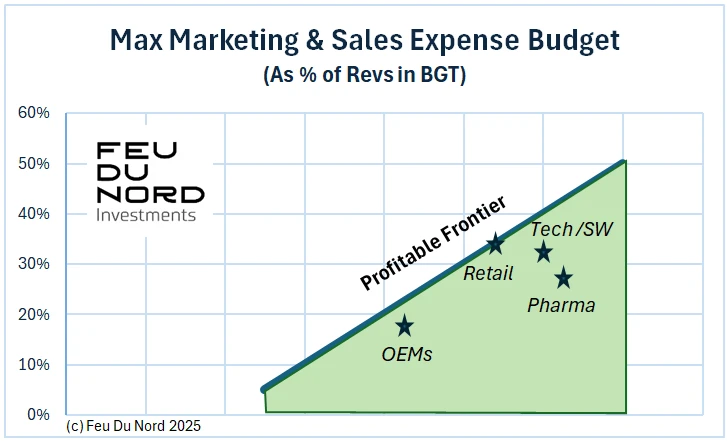
<p><span style="font-size: 18px;">In the realm of corporate financial planning, the precise allocation of Marketing Costs and Sales Expense remains one of the most neglected yet vital management disciplines. Too often, businesses focus on whether they <em data-start="444" data-end="450">have</em> the budget to spend, without ever rigorously questioning <em data-start="508" data-end="518">how much</em> they should spend — and at what level such spending becomes profitable.</span></p>
<p style="text-align: justify;"> </p>
<p><span style="font-size: 18px;">At Feu.Du.Nord, we believe that this is not simply a question of resource availability. It is fundamentally about understanding the profitable frontier of commercial investment — the point at which every incremental pound spent on sales or marketing continues to generate more than it consumes. This boundary is never fixed. It shifts according to industry context, product or service type, gross margins, go-to-market strategies, and, critically, marketing ROI.</span></p>
<p style="text-align: justify;"> </p>
<p style="text-align: justify;"><span style="font-size: 18px;">The allocation of Marketing Costs and Sales Expense is too often a budgeting afterthought when it should be a strategic priority. Knowing what to spend is just as important as having the funds to spend it. Identifying the profitable frontier — and continuously managing towards it — is the difference between growth that is accidental and growth that is engineered.</span></p>
<p style="text-align: justify;" data-start="592" data-end="1054"> </p>
<h2><span style="color: #169179; font-family: Lato;">2. The Misunderstood Expense: Marketing and Sales</span></h2>
<p style="text-align: justify;" data-start="1113" data-end="1424"> </p>
<p style="text-align: justify;" data-start="1113" data-end="1424"><span style="font-size: 18px;">In many organisations, Marketing and Sales expenses are treated as flexible lines on a spreadsheet rather than core levers of value creation. Worse, they are often among the first to be cut when pressures arise, without a proper evaluation of their contribution to growth, customer retention, or lifetime value.</span></p>
<p style="text-align: justify;" data-start="1426" data-end="1811"><span style="font-size: 18px;">However, high-performing businesses — and the investors behind them — understand that commercial costs are investments in future cash flow. When evaluated through the lens of return on invested capital (ROIC), internal rate of return (IRR), or time-weighted rate of return (TWRR), sales and marketing spend should be held to the same standards of accountability as capital expenditure.</span></p>
<p style="text-align: justify;" data-start="1426" data-end="1811"> </p>
<p style="text-align: justify;" data-start="1426" data-end="1811"><span style="font-size: 18px;"><img src="https://static.ucraft.net/fs/ucraft/userFiles/feudunord/uploaded-media/max-marketing-sales-expense-in-budget-17491121761252.webp" alt="Profitability frontier of Marketing and Sales Expenses" width="727" height="442" data-width="727" data-height="442"></img></span></p>
<hr data-start="1813" data-end="1816"></hr>
<p style="text-align: justify;" data-start="1818" data-end="1851"> </p>
<h2><span style="color: #169179; font-family: Lato;">3. Towards a Profitable Frontier</span></h2>
<p style="text-align: justify;" data-start="1113" data-end="1424"> </p>
<p style="text-align: justify;" data-start="1853" data-end="1954"><span style="font-size: 18px;">The optimal budgetary allocation of sales and marketing requires clarity on the following parameters:</span></p>
<p style="text-align: justify;" data-start="1853" data-end="1954"> </p>
<ul style="text-align: justify;" data-start="1956" data-end="2580">
<li data-start="1956" data-end="2098">
<p data-start="1958" data-end="2098"><span style="font-size: 18px;"><strong data-start="1958" data-end="1982">Industry Benchmarks:</strong> High-growth sectors (e.g. SaaS or biotech) may require outsized early spend versus mature, margin-tight OEM industries.</span></p>
</li>
<li data-start="2099" data-end="2221">
<p data-start="2101" data-end="2221"><span style="font-size: 18px;"><strong data-start="2101" data-end="2119">Gross Margins:</strong> Higher margins afford more freedom to invest aggressively in customer acquisition or brand awareness.</span></p>
</li>
<li data-start="2222" data-end="2342">
<p data-start="2224" data-end="2342"><span style="font-size: 18px;"><strong data-start="2224" data-end="2247">Marketing-to-Sales Mix Strategy:</strong> Different industries have a different mix of Marketing-to-Sales Expense ratio. In Retail for instance we will find large %'s of marketing costs vs. Revenues, while at the same time a rather optimised sales-force. While in Software or Technology sectors we will find that sales force expenditure easily doubles all marketing efforts. Beyond a direct sales-led model has different cost dynamics from a channel or digital-first approach.</span></p>
</li>
<li data-start="2343" data-end="2450">
<p data-start="2345" data-end="2450"><span style="font-size: 18px;"><strong data-start="2345" data-end="2377">Minimum Viable Sales Productivity:</strong> Ensuring that every sales rep meets a baseline of sales minimum quotas in the right timing before scaling, is key to have a healthy expense allocation and commercial model. </span></p>
</li>
<li data-start="2451" data-end="2580">
<p data-start="2453" data-end="2580"><span style="font-size: 18px;"><strong data-start="2453" data-end="2480">Marketing ROI Tracking:</strong> Rigorous attribution models and performance metrics are non-negotiable for sustained profitability.</span></p>
</li>
</ul>
<p> </p>
<h2><span style="color: #169179; font-family: Lato;">4. How we help</span></h2>
<p style="text-align: justify;" data-start="2616" data-end="2999"> </p>
<p style="text-align: justify;" data-start="2616" data-end="2999"><span style="font-size: 18px;">At Feu.Du.Nord, we work alongside Private Equity firms and Corporate leadership to define the right level of commercial expenditure — not only for short-term budget discipline but for long-term value creation. Our methodologies integrate market intelligence, financial modelling, and operational best practice to ensure budgets are not just “funded”, but <em data-start="2971" data-end="2982">justified </em><span style="font-size: 18px;">and</span> <em data-start="2987" data-end="2998">optimised.</em></span></p>
<p style="text-align: justify;" data-start="2616" data-end="2999"> </p>
<p style="text-align: justify;" data-start="3001" data-end="3280"><span style="font-size: 18px;">Furthermore, we advocate for the must-do <em>performance follow-up</em> — without which no budgeting decision can be executed properly. By tying commercial inputs to measurable business outcomes, we bring transparency and precision to one of the most impactful areas of financial decision-making.</span></p>
<p style="text-align: justify;" data-start="3001" data-end="3280"> </p>
<p style="text-align: justify;" data-start="3001" data-end="3280"> </p>]]>
            </summary>
                            <link rel="enclosure" href="https://static.ucraft.net/fs/ucraft/userFiles/feudunord/images/a-33-max-marketing-sales-expense-in-budget-17491131745251.png" length="43728" type="image/png" />
                        <category term="STRATEGY" />
            <updated>2025-06-05T08:23:42+00:00</updated>
                            <dc:description><![CDATA[In the realm of corporate financial planning, the precise allocation of Marketing Costs and Sales Expense remains one of the most neglected yet vital management disciplines. ]]></dc:description>
                    </entry>
            <entry>
            <title><![CDATA[OEM Industries: Competing in turmoil times]]></title>
            <link rel="alternate" href="https://www.feudunord.com/blog/strategy-2/oem-industries-competing-in-turmoil-times-3" />
            <id>https://www.feudunord.com/blog/strategy-2/oem-industries-competing-in-turmoil-times-3</id>
            <author>
                <name><![CDATA[Manuel Alinque]]></name>
                                    <email><![CDATA[manuel.alinque@gmail.com]]></email>
                            </author>
            <summary type="html">
                <![CDATA[<p> </p>
<h2><span style="color: #169179;">1. A Context of Gusty Winds</span></h2>
<h5> </h5>
<h5><span style="color: #000000;">As the new geopolitical environment takes shape, Industrial Original Equipment Manufacturers (OEM) see how reading the context of their businesses has become more complicated. The existence of contradictory forces and the increase in pressure on the P/L, makes strategic decision making particularly complicated in the midst of uncertainty.</span></h5>
<h5> </h5>
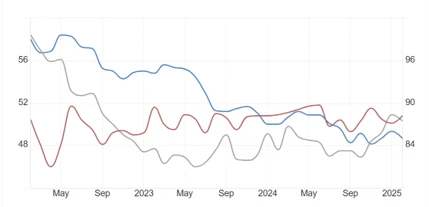
<h5><span style="color: #000000;">The decline of industrial optimism in Germany contrast with the improvement of the ISM Manufacturing PMI in the United States. (see A) Even China has seen a small improvement since the beginning of 2025.</span></h5>
<h5> </h5>
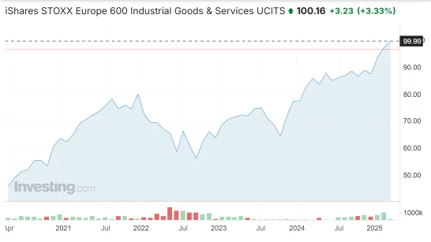
<h5><span style="color: #000000;">But at the same time, diluting the particular complications of the Auto industry, the set of OEMs in Europe have demonstrated historical strengths (see B), which continue to attract the interest of global markets.</span></h5>
<h5> </h5>
<h5><span style="color: #000000;">And yet the threats of custom tariffs materialize (see C), while new fears of inflation could put at risk the path of lowering interest rates, so important for CapEx-Intensive industries such as those of OEMs.</span></h5>
<h5> </h5>
<h5><em><strong><span style="color: #000000;">In this context, what sort of corporate strategy decisions should be on the Board check-list ?</span></strong></em></h5>
<p> </p>
<h5><strong><span style="color: #169179;">MANUFACTURING</span><span style="color: #169179;"> SENTIMENT</span></strong></h5>
<h5> </h5>
<h5><span style="color: #000000;">(A) While German IFO (in blue) is at historical low, United States ISM Manufacturing PMI (in grey) seems to improve catching up with China’s Caixin Manufacturing (in red)</span></h5>
<p> </p>
<p><span style="color: #000000;"><img src="https://static.ucraft.net/fs/ucraft/userFiles/feudunord/uploaded-media/manufacturing-sentiment-17417180530142.webp" alt="Manufacturing Sentiment" data-width="0" data-height="0"></img></span></p>
<p> </p>
<p><span style="color: #000000;"><em>Source: Ifo institute, Institute for Supply Management and S&amp;P Global</em></span></p>
<p> </p>
<h5><strong><span style="color: #169179;">BUT EUROPE INDUSTRY AT HIGHS</span></strong></h5>
<h5> </h5>
<h5>(B) Despite conflicting forces, and diluting the effect of the European Car industry, the overall performance of OEM Industrial companies has demonstrated to be as a set strong. In the figure the <em>STOXX Europe 600 Industrial Goods &amp; Services</em></h5>
<p><em><img src="https://static.ucraft.net/fs/ucraft/userFiles/feudunord/uploaded-media/but-europe-industry-at-highs-17417181538035.webp" alt="But Europe Industry at Highs" data-width="0" data-height="0"></img></em></p>
<p><em><em>Source: Investing.com</em></em></p>
<p> </p>
<h5><strong><span style="color: #169179;">AND AT THE SAME TIME WORLD TRADE UNCERTAINTY AT RECORD HEIGHTS</span></strong></h5>
<h5> </h5>
<h5><span style="color: #000000;">(C) And still linked to the new US Administration policy on international trade, uncertainty index is rocketing making it very difficult to know where to address the corporate strategy helm to cope with the new market conditions.</span></h5>
<p> </p>
<p><span style="color: #000000;"><img src="https://static.ucraft.net/fs/ucraft/userFiles/feudunord/uploaded-media/and-at-the-same-time-world-trade-uncertainty-at-record-heights-17417182724042.webp" alt="AND AT THE SAME TIME WORLD TRADE UNCERTAINTY AT RECORD HEIGHTS" width="445" height="164" data-width="445" data-height="164"></img></span></p>
<p><span style="color: #000000;"><em>Source: IMF </em><em>MacroMicro</em></span></p>
<p> </p>
<h2><span style="color: #169179;">2. Improving Revenue Stability</span></h2>
<h5> </h5>
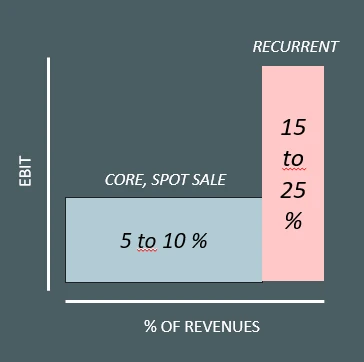
<h5>About ten years ago, at the same time that the new digital capabilities accelerated the transformation of business models,  OEM companies started to gain additional interest in the idea of reinforcing the recurrent revenue, sometimes also referred as annuity, in the P&amp;L.</h5>
<h5> </h5>
<h5>The appealing is easy to explain, recurrent revenues like after-sale services, aftermarket parts or software licenses easily double or triple the level of profitability of core products themselves.</h5>
<h5> </h5>
<h5><span style="color: #169179;">Today, in the new context of turmoil, the need for a structural stable base of annuity revenues is strategically even more important.</span></h5>
<h5> </h5>
<h5>A higher degree of recurrent revenues will make the P&amp;L more solid and resilient to the bumps and the potholes, but also it will change the value perceived by the client base and its loyalty.</h5>
<h5> </h5>
<h5>Unfortunately, like anything good, it is not so easy to achieve. The new recurrent revenues will require new services, supply-chain traceability and new selling skills,  among other things. These new capabilities will not sit idle in the company, it will imply a good assessment of what the company already have and what needs to be bought, whether it is in the form of “make” (IT projects) or “buy” (M&amp;A).</h5>
<p> </p>
<p><img src="https://static.ucraft.net/fs/ucraft/userFiles/feudunord/uploaded-media/core-revenues-vs-recurrent-17417184725207.webp" alt="Core Revenues vs Recurrent" data-width="0" data-height="0"></img></p>
<p><span style="color: #000000;"><em>Source: FdN</em></span></p>
<p> </p>
<h5><strong><span style="color: #169179;">TYPICAL CAPABILITIES TO REINFORCE</span></strong></h5>
<p> </p>
<h5><span style="color: #169179;">Supply Chain Capability / IoT</span></h5>
<h5><span style="color: #000000;">New value added needs a really optimized supply chain, from forecasting to fulfilment, that with today’s IoT technologies uncover new service revenue areas for the OEM.</span></h5>
<p> </p>
<h5><span style="color: #169179;">Digital Client Relationship</span></h5>
<h5><span style="color: #000000;">Digital client relationship is no longer an exclusive domain of the digital consumer, it is also key to gain fluidity on the B2B relationships.</span></h5>
<p> </p>
<h5><span style="color: #169179;">AI-Service &amp; Monitoring</span></h5>
<h5><span style="color: #000000;">The main uncover stream of recurrent revenues sits on the ability to monitor and service the lifecycle of the OEM products.</span></h5>
<p> </p>
<h5><span style="color: #169179;">Sales Coverage &amp; Dealers</span></h5>
<h5><span style="color: #000000;">Diversification is a great statistical source of stability on the revenue base. Turmoil times may be also good for stepping into previously complex areas or competitors.</span></h5>
<p> </p>
<h5><span style="color: #169179;">Capital Solutions</span></h5>
<h5><span style="color: #000000;">Always minimised and often ignored the importance of proper capital solutions to speed-up sales, unlocking decisions and increasing global margins is paramount for the competing scenario. </span></h5>
<p> </p>
<h5><span style="color: #169179;">Circular Economy</span></h5>
<h5>Circular economy is indeed about seeing new business opportunities in the after-market, while doing good for the ESG, and setting the pace from the OEM also in the area.</h5>
<p> </p>
<h2><span style="color: #169179;">3. Carve-Outs: Gaining Agility</span></h2>
<h5 style="text-align: justify;"> </h5>
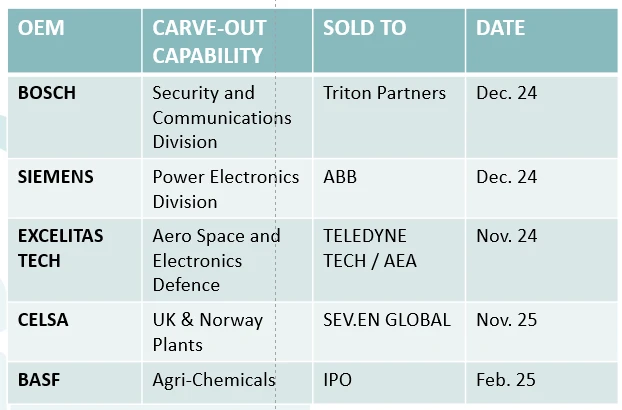
<h5 style="text-align: justify;"><span style="color: #000000;">It is probably not in the ADN of the industrial OEM, which as investor tends to buy or build and keep the capabilities unless a really distress situation arrives. And still this vision of the industrial OEM as a stable investor continues to be the case in general. Nonetheless, the speed of change in the competitive environment leads eventually to do a step backwards just be able to gain inertia (funds) and jump forward three steps in the adjusted direction marked by the new strategy.</span></h5>
<h5 style="text-align: justify;"> </h5>
<h5 style="text-align: justify;"><span style="color: #000000;">That implies often selling some good capabilities, which happen to be in the bad geography, or to play in no longer core technologies for the industrial group.</span></h5>
<h5 style="text-align: justify;"> </h5>
<h5 style="text-align: justify;"><span style="color: #000000;">The feasibility of these “carve-out” operations increases with the emergence of new Private Equity investors that will see this as a great opportunity to seize the way of the carved-out division and dig deeper and further on its growth.</span></h5>
<h5 style="text-align: justify;"> </h5>
<h5 style="text-align: justify;"><span style="color: #000000;">Of course that there are still some situations for distress and probably dismantle the value. But it is not on the mainstream of today’s Private Equity, which look primarily for stable and solid investments to make the expand, flourish and sell at a higher value.</span></h5>
<h5 style="text-align: justify;"> </h5>
<h5 style="text-align: justify;"><span style="color: #000000;">Other Industrial groups, particularly local    ones,   will    eventually    show </span><span style="color: #000000;">Interest in the new investment opportunity to gain local quota, reinforce their capabilities, or simply diversify.</span></h5>
<p> </p>
<h5 style="text-align: justify;"><span style="color: #000000;">In any of the cases, with new acquirers being Private Equity funds or Industrial Groups, Carve-outs are sometimes a necessary step to gain funds, get rid of unnecessary management time, and gain focus on the core of the new or adjusted strategy, that will probably go through more but different acquisitions in the desired domains and markets.</span></h5>
<h5 style="text-align: justify;"> </h5>
<h5 style="text-align: justify;"><span style="color: #000000;">Turmoil times are also great for taking these decisions to show to shareholders, employees and partners a mastery of the OEM’s yellow path to achieve the OEM’s goals.</span></h5>
<p> </p>
<h5><strong><span style="color: #169179;">SOME CARVE-OUTS PERFORMED BY OEM's</span></strong></h5>
<p><span style="color: #000000;"><img src="https://static.ucraft.net/fs/ucraft/userFiles/feudunord/uploaded-media/some-carve-outs-performed-by-oems-17417192586243.webp" alt="Some carve outs performed by OEMs" data-width="0" data-height="0"></img></span></p>
<p> </p>
<h5 style="text-align: justify;"><span style="color: #169179;"><em><strong>A FOCUS GAME: MAIN REASONS FOR SELLING: </strong><strong>FOCUS ON CORE ACTIVITIES AND/OR CORE MARKETS</strong></em></span></h5>
<h5> </h5>
<h2><span style="color: #169179;">4. Searching Speed of Growth</span></h2>
<h5 style="text-align: justify;"> </h5>
<h5 style="text-align: justify;">Once settled of any carve-out and ready to heap up for growth and to take advantage of the opportunities that any turmoil period arise, the Industrial OEM can look for <strong>ways of achieving and accelerating profitable growth</strong>.</h5>
<h5 style="text-align: justify;"> </h5>
<h5 style="text-align: justify;">With the right fit analysis and target definition of the required capabilities  the mission is adding (or building, or both) another “Regional Champion” company/division in the Corporate Portfolio.</h5>
<h5 style="text-align: justify;"> </h5>
<h5 style="text-align: justify;">Fortunately, the industrial <em>tissue </em>of companies in Europe still contains  sweet spots where the acquirer will eventually find the combination of 5 key sets of features:</h5>
<p> </p>
<h5 style="text-align: justify;">1. Corporate, Technical and Cultural Fit.</h5>
<h5 style="text-align: justify;">2. Potential for organic business-as-usual growth.</h5>
<h5 style="text-align: justify;">3. Cross-border scale.</h5>
<h5 style="text-align: justify;">4. Consolidation opportunities.</h5>
<h5 style="text-align: justify;">5. Valuations out of the main street.</h5>
<h5 style="text-align: justify;"> </h5>
<h5 style="text-align: justify;">At FdN, our analysis of markets and experience, tells us that although being complex, it is not a unicorn to find; it is actually most of times feasible, and we have found it on several target companies crediting the convergence of the five set of elements.</h5>
<h5 style="text-align: justify;"> </h5>
<h5><strong><span style="color: #169179;">THE FEU-DU-NORD 25 M&amp;A CHECKS</span></strong></h5>
<ol>
<li>
<p><span style="color: #169179;">Info-Memo analysis</span></p>
</li>
<li>
<p><span style="color: #169179;">Soundness of the seller’s BP. Breakdown. </span><span style="color: #169179; font-family: var(--p-font-family); font-size: var(--p-font-size); font-weight: var(--p-font-weight); letter-spacing: var(--p-letter-spacing);">Sources and destroyers of value.</span></p>
</li>
<li>
<p><span style="color: #169179; font-family: var(--p-font-family); font-size: var(--p-font-size); font-weight: var(--p-font-weight); letter-spacing: var(--p-letter-spacing);">Commercial and operational synergies. CapEx requirements. 1st internal Business Plan.</span></p>
</li>
<li>
<p><span style="color: #169179; font-family: var(--p-font-family); font-size: var(--p-font-size); font-weight: var(--p-font-weight); letter-spacing: var(--p-letter-spacing);">Analysis of cash and WCR.</span></p>
</li>
<li>
<p><span style="font-family: var(--p-font-family); font-size: var(--p-font-size); font-weight: var(--p-font-weight); letter-spacing: var(--p-letter-spacing); color: #169179;">Analysis of assets and financial position. </span><span style="font-family: var(--p-font-family); font-size: var(--p-font-size); font-weight: var(--p-font-weight); letter-spacing: var(--p-letter-spacing); color: #169179;">Internal plan on debt and capitalisation.</span></p>
</li>
<li>
<p><span style="color: #169179; font-family: var(--p-font-family); font-size: var(--p-font-size); font-weight: var(--p-font-weight); letter-spacing: var(--p-letter-spacing);">First Internal valuation (x &amp; DCF). Range.</span></p>
</li>
<li>
<p><span style="color: #169179; font-family: var(--p-font-family); font-size: var(--p-font-size); font-weight: var(--p-font-weight); letter-spacing: var(--p-letter-spacing);">Risk and scenario analysis. Internal BP.</span></p>
</li>
<li>
<p><span style="color: #169179; font-family: var(--p-font-family); font-size: var(--p-font-size); font-weight: var(--p-font-weight); letter-spacing: var(--p-letter-spacing);">Human resources plan.</span></p>
</li>
<li>
<p><span style="font-family: var(--p-font-family); font-size: var(--p-font-size); font-weight: var(--p-font-weight); letter-spacing: var(--p-letter-spacing); color: #169179;">Final internal base model (Final - Iterated), </span><span style="font-family: var(--p-font-family); font-size: var(--p-font-size); font-weight: var(--p-font-weight); letter-spacing: var(--p-letter-spacing); color: #169179;">EV + decision on Initial Offer Price and Deal Structuring.</span></p>
</li>
<li>
<p><span style="color: #169179; font-family: var(--p-font-family); font-size: var(--p-font-size); font-weight: var(--p-font-weight); letter-spacing: var(--p-letter-spacing);">Governance Plan</span></p>
</li>
<li>
<p><span style="font-family: var(--p-font-family); font-size: var(--p-font-size); font-weight: var(--p-font-weight); letter-spacing: var(--p-letter-spacing); color: #169179;">Competitive Analysis. Negotiation Process </span><span style="font-family: var(--p-font-family); font-size: var(--p-font-size); font-weight: var(--p-font-weight); letter-spacing: var(--p-letter-spacing); color: #169179;">Governance/ Advisory.</span></p>
</li>
<li>
<p><span style="color: #169179; font-family: var(--p-font-family); font-size: var(--p-font-size); font-weight: var(--p-font-weight); letter-spacing: var(--p-letter-spacing);">Development of counter-offer (if required)</span></p>
</li>
<li>
<p><span style="font-family: var(--p-font-family); font-size: var(--p-font-size); font-weight: var(--p-font-weight); letter-spacing: var(--p-letter-spacing); color: #169179;">LoI - drafting/co-writing, negotiation, </span><span style="font-family: var(--p-font-family); font-size: var(--p-font-size); font-weight: var(--p-font-weight); letter-spacing: var(--p-letter-spacing); color: #169179;">and agreement.</span></p>
</li>
<li>
<p><span style="color: #169179; font-family: var(--p-font-family); font-size: var(--p-font-size); font-weight: var(--p-font-weight); letter-spacing: var(--p-letter-spacing);">PMO due diligence.</span></p>
</li>
<li>
<p><span style="color: #169179; font-family: var(--p-font-family); font-size: var(--p-font-size); font-weight: var(--p-font-weight); letter-spacing: var(--p-letter-spacing);">Commercial due diligence</span></p>
</li>
<li>
<p><span style="color: #169179; font-family: var(--p-font-family); font-size: var(--p-font-size); font-weight: var(--p-font-weight); letter-spacing: var(--p-letter-spacing);">Accounting due diligence</span></p>
</li>
<li>
<p><span style="color: #169179; font-family: var(--p-font-family); font-size: var(--p-font-size); font-weight: var(--p-font-weight); letter-spacing: var(--p-letter-spacing);">Tax due diligence</span></p>
</li>
<li>
<p><span style="color: #169179; font-family: var(--p-font-family); font-size: var(--p-font-size); font-weight: var(--p-font-weight); letter-spacing: var(--p-letter-spacing);">Legal and social due diligence</span></p>
</li>
<li>
<p><span style="color: #169179; font-family: var(--p-font-family); font-size: var(--p-font-size); font-weight: var(--p-font-weight); letter-spacing: var(--p-letter-spacing);">HR due diligence</span></p>
</li>
<li>
<p><span style="color: #169179; font-family: var(--p-font-family); font-size: var(--p-font-size); font-weight: var(--p-font-weight); letter-spacing: var(--p-letter-spacing);">IT due diligence</span></p>
</li>
<li>
<p><span style="color: #169179; font-family: var(--p-font-family); font-size: var(--p-font-size); font-weight: var(--p-font-weight); letter-spacing: var(--p-letter-spacing);">Post-DD adjustments and agreement (if necessary)</span></p>
</li>
<li>
<p><span style="color: #169179; font-family: var(--p-font-family); font-size: var(--p-font-size); font-weight: var(--p-font-weight); letter-spacing: var(--p-letter-spacing);">Assistance with internal financing agreements (if necessary)</span></p>
</li>
<li>
<p><span style="font-family: var(--p-font-family); font-size: var(--p-font-size); font-weight: var(--p-font-weight); letter-spacing: var(--p-letter-spacing); color: #169179;">Share Purchase Agreement/SPA. </span><span style="font-family: var(--p-font-family); font-size: var(--p-font-size); font-weight: var(--p-font-weight); letter-spacing: var(--p-letter-spacing); color: #169179;">Negotiations and drafts up to signature.</span></p>
</li>
<li>
<p><span style="font-family: var(--p-font-family); font-size: var(--p-font-size); font-weight: var(--p-font-weight); letter-spacing: var(--p-letter-spacing); color: #169179;">Advance preparation of the 90-day Plan </span><span style="font-family: var(--p-font-family); font-size: var(--p-font-size); font-weight: var(--p-font-weight); letter-spacing: var(--p-letter-spacing); color: #169179;">and the PMI roadmap.</span></p>
</li>
<li>
<p><span style="font-family: var(--p-font-family); font-size: var(--p-font-size); font-weight: var(--p-font-weight); letter-spacing: var(--p-letter-spacing); color: #169179;">Quarterly support within the</span><strong style="font-family: var(--p-font-family); font-size: var(--p-font-size); letter-spacing: var(--p-letter-spacing); color: #169179;"> </strong><span style="font-family: var(--p-font-family); font-size: var(--p-font-size); font-weight: var(--p-font-weight); letter-spacing: var(--p-letter-spacing); color: #169179;">Monitoring Council/Committee.</span></p>
</li>
</ol>
<h5><strong><span style="color: #169179;">KEY ELEMENTS FOR THE IDENTIFICATION OF ACQUISITION TARGETS</span></strong></h5>
<p> </p>
<h5 style="text-align: justify;"><strong>1. Corporate, Technical and Cultural Fit.</strong></h5>
<h5>The first set of elements to define and influence the casting of potential targets are of course corporate and financial criteria (size, ownership, situation, etc.), technical capabilities sought after, and ideal cultural fit requirements</h5>
<p> </p>
<h5 style="text-align: justify;"><strong>2. Potential for organic business-as-usual growth.</strong></h5>
<h5 style="text-align: justify;">Despite turmoil (and even crisis) in some segments, there are a number of industries with double-digit demand growth forecasted for the next five to ten years, these tail winds will help achieving results independently of any other factors</h5>
<p> </p>
<h5 style="text-align: justify;"><strong>3. Cross-border scale.</strong></h5>
<h5 style="text-align: justify;">Whether tackled from the beginning or as a value strategy for the future, the potential synergies of scale (top and bottom of P&amp;L) and better cross border client/dealer’s coverage, are must have criteria</h5>
<p> </p>
<h5 style="text-align: justify;"><strong>4. Consolidation opportunities.</strong></h5>
<h5 style="text-align: justify;">It is required an analysis of what we at FdN call the “Long-tail” profile, this will indicate the degree of consolidation and space for new leaders in the market segment and a good understanding of competition</h5>
<p> </p>
<h5 style="text-align: justify;"><strong>5. Valuations out of the main street.</strong></h5>
<h5><span style="color: #000000;">If possible, valuations will be outside the hot spot of the main street investors, this will make the approach not only more convenient but also less risky in terms of information asymmetry</span></h5>
<p> </p>
<p> </p>
<h2><span style="color: #169179;">5. How we help</span></h2>
<p> </p>
<h5><span style="color: #169179;"><strong>MARKET STRATEGIES</strong></span></h5>
<h5><span style="color: #000000;">Understanding markets and value creation dynamics is the essence of what we do. We only advise in verticals that we master and we start always by listening carefully to our clients. Our strategy thinking is always precise and fact based, sitting right in the center of the Board Agenda. We help with:</span></h5>
<ul>
<li>
<h5><strong><span style="color: #e67e23;">Strategy checks</span></strong></h5>
</li>
<li>
<h5><strong><span style="color: #e67e23;">Board memberships</span></strong></h5>
</li>
<li>
<h5><strong><span style="color: #e67e23;">Strategy Definition</span></strong></h5>
</li>
</ul>
<h5> </h5>
<h5><span style="color: #169179;"><strong>FINANCIAL ADVISORY</strong></span></h5>
<h5>Our Financial Advisory do not compare nor substitute accounting or transaction services. We will focus on the strategy of a transaction, the business plan, the scenarios and the valuation of it. We play the role of marking well the yellow road with side red lines for any transaction, making sure of governance and focus if required.</h5>
<ul>
<li>
<h5><strong><span style="color: #e67e23;">M&amp;A approach, strat &amp; valuation</span></strong></h5>
</li>
<li>
<h5><strong><span style="color: #e67e23;">Negotiation guide</span></strong></h5>
</li>
<li>
<h5><strong><span style="color: #e67e23;">Transaction governance</span></strong></h5>
</li>
</ul>
<h5> </h5>
<h5><span style="color: #169179;"><strong>INDUSTRIAL PARTNERSHIPS</strong></span></h5>
<h5><span style="color: #000000;">Despite difficulties, or precisely because of them, we know how to help on the choice and formation of Strategic Alliances and Joint Ventures, typically for achieving Capital Solutions, Market Reach, or Winning Tenders.</span></h5>
<ul>
<li>
<h5><strong><span style="color: #e67e23;">Strat Alliances guide</span></strong></h5>
</li>
<li>
<h5><strong><span style="color: #e67e23;">Tenders in co-operation</span></strong></h5>
</li>
<li>
<h5><strong><span style="color: #e67e23;">Public-Private Partnerships</span></strong></h5>
</li>
</ul>
<h5> </h5>
<h5><span style="color: #169179;"><strong>INVESTMENTS</strong></span></h5>
<h5><span style="color: #000000;">We cast, facilitate and guide the collaboration between industrial players and private investors, choosing carefully the right fit, to enable successful investments and long-lasting business relationships.</span></h5>
<ul>
<li>
<h5><strong><span style="color: #e67e23;">Private Equity Investments</span></strong></h5>
</li>
<li>
<h5><strong><span style="color: #e67e23;">Corporate Venturing advisory</span></strong></h5>
</li>
<li>
<h5><strong><span style="color: #e67e23;"><span style="font-family: var(--h5-font-family); font-size: calc(var(--heading-ratio-tablet) * 1rem); letter-spacing: var(--h5-letter-spacing);">Indirect-Influence strategies</span></span></strong></h5>
</li>
</ul>
<p> </p>
<p> </p>]]>
            </summary>
                            <link rel="enclosure" href="https://static.ucraft.net/fs/ucraft/userFiles/feudunord/images/a-31-oem-competing-in-turmoil-times--squared-17417223807161.png" length="312564" type="image/png" />
                        <category term="STRATEGY" />
            <updated>2025-03-11T18:30:25+00:00</updated>
                            <dc:description><![CDATA[In tumoil times, what sort of corporate strategy decisions should be on the Board check-list ? a focus on OEM]]></dc:description>
                    </entry>
            <entry>
            <title><![CDATA[GREEN AI: Positive externalities of Artificial Intelligence]]></title>
            <link rel="alternate" href="https://www.feudunord.com/blog/private-equity-2/greenai" />
            <id>https://www.feudunord.com/blog/private-equity-2/greenai</id>
            <author>
                <name><![CDATA[Manuel Alinque]]></name>
                                    <email><![CDATA[manuel.alinque@gmail.com]]></email>
                            </author>
            <summary type="html">
                <![CDATA[<p> </p>
<h2><span style="font-size: 30px; font-family: Roboto; color: #169179;">GREEN AI: Positive externalities of Artificial Intelligence. The Spanish Case.</span></h2>
<h5> </h5>
<h5><span style="font-size: 18px;">According to some views AI would be against or even a barrier to ESG’s an climate-change fight. But does it really the case? Clearly not. Indeed, AI is allowing not only for a productivity boost, but it is also opening new collateral business opportunities in the Energy and Engineering sectors.</span></h5>
<p> </p>
<h4><span style="color: #236fa1;">One Digit Impact</span></h4>
<h5> </h5>
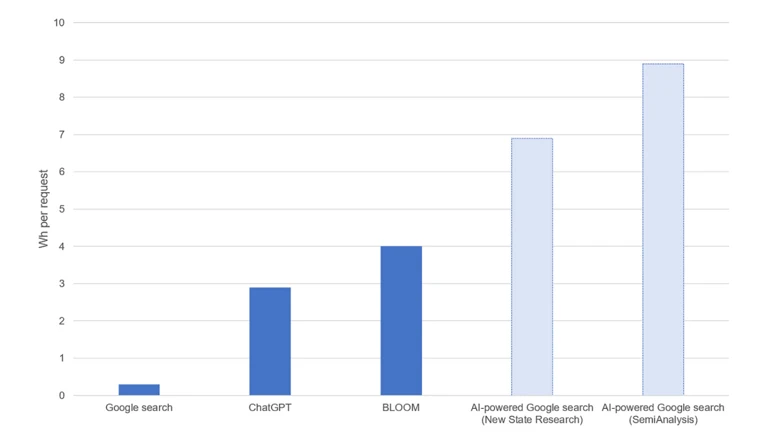
<h5><span style="font-size: 18px;">In 2024 AI’s have consumed 32.8 TWh, assuming to keep a 32% CAGR it will reach 500 TWh in 10 years, which will only be 1,6 % of World Power Consumption.</span></h5>
<p> </p>
<p><span style="font-size: 16px;"><img src="https://static.ucraft.net/fs/ucraft/userFiles/feudunord/uploaded-media/wh-per-chatgpt-request-17347849618221.webp" alt="Wh per AI Request" width="774" height="436" data-width="774" data-height="436"></img></span></p>
<p><span style="font-size: 16px;">Source: Wh per AI Requests, Cell Press</span></p>
<p> </p>
<h4> </h4>
<h4><span style="color: #236fa1;">New Glo-Local Opportunities</span></h4>
<h5> </h5>
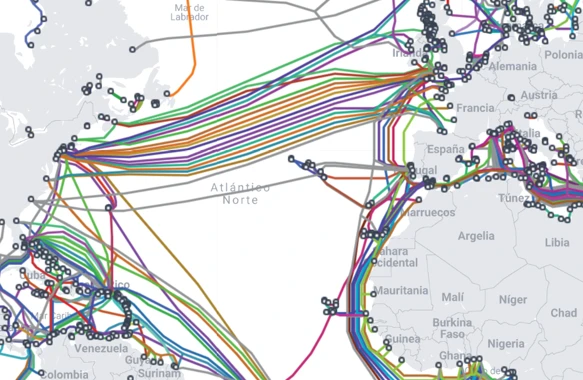
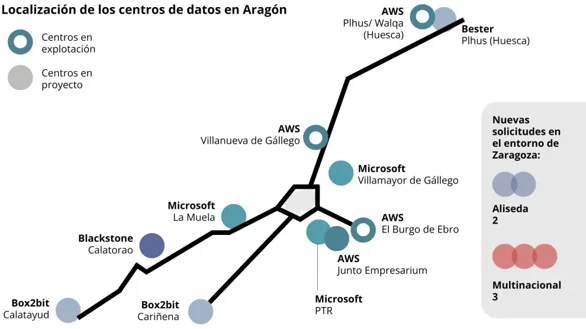
<h5><span style="font-size: 18px;">Nonetheless, power <strong>grids</strong><strong> </strong><strong>need to</strong><strong> </strong><strong>adapt</strong>, as new Data Centers will open to deliver cost efficiency, low global latency and data sovereignty. Zaragoza spot, in Spain, is one of those examples.</span></h5>
<p> </p>
<p><img src="https://static.ucraft.net/fs/ucraft/userFiles/feudunord/uploaded-media/zaragoza-hotspot-1-17347851786613.webp" alt="Zaragoza as mid-point of submarines internet cables" width="583" height="380" data-width="583" data-height="380"></img></p>
<p> </p>
<p>Source: Zaragoza as mid-point of Internet Submarines Cables</p>
<p> </p>
<p><img src="https://static.ucraft.net/fs/ucraft/userFiles/feudunord/uploaded-media/zaragoza-hotspot-2-17347852685507.webp" alt="18 Data Centres to be in the Zaragoza area" width="586" height="329" data-width="586" data-height="329"></img></p>
<p> </p>
<p>Source: Heraldo de Aragón, Kristina Urresti. 18 Data Centres in the Zaragoza Area</p>
<h4> </h4>
<p> </p>
<h4><span style="color: #236fa1;">An Affordable ESG challenge</span></h4>
<p> </p>
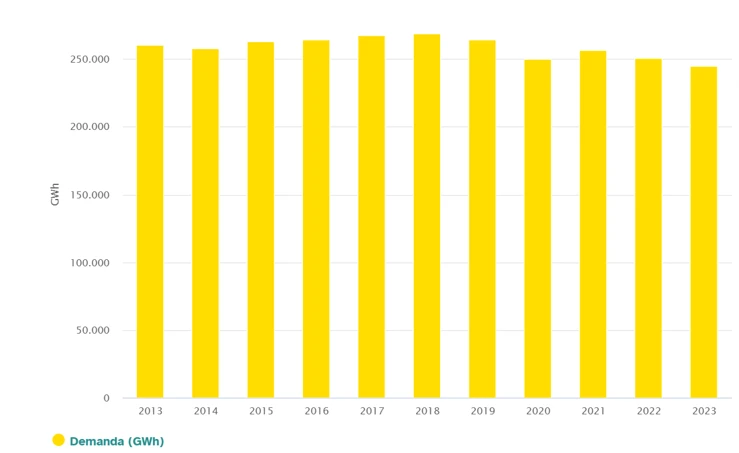
<p><span style="font-size: 18px;">Adding 1 or 2% from AI to the Power Demand will indeed be positive for Utilities to offset drops in demand caused by the increase of domestic and industries renewables self-generation.</span></p>
<p> </p>
<p><span style="font-size: 18px;">In Spain 63% of Installed Capacity is Renewable, but the global demand is declining as energy transition goes further.</span></p>
<p> </p>
<p><span style="font-size: 16px;"><img src="https://static.ucraft.net/fs/ucraft/userFiles/feudunord/uploaded-media/spain-electric-power-demand-17347856469277.webp" alt="Spain Annual Electric Power Demand" width="739" height="453" data-width="739" data-height="453"></img></span></p>
<p> </p>
<p><span style="font-size: 14px;">Source: Red Eléctrica de España</span></p>
<p> </p>
<h4> </h4>
<h4><span style="color: #236fa1;">AI Opens new Business in Engineering and Power Solutions</span></h4>
<h5> </h5>
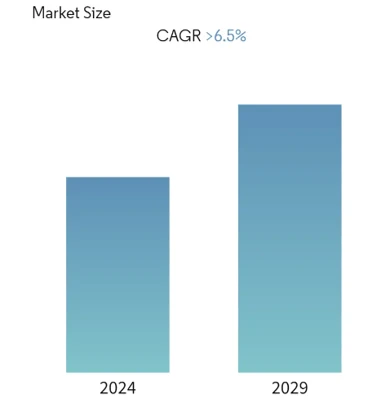
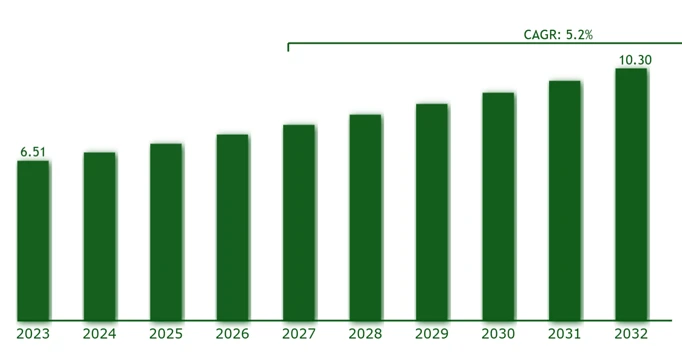
<h5><span style="font-size: 18px;">Although new Data Centres will be sourced by Renewables in more than 50%, the business continuity, heat efficiency, and uninterruptible power supply (UPS) requires new auxiliary power, which unleashes the market of Generator Sets Units.</span></h5>
<p> </p>
<p><span style="font-size: 16px;"><img src="https://static.ucraft.net/fs/ucraft/userFiles/feudunord/uploaded-media/generation-sets-global-markets-17347858625216.webp" alt="Generation Sets, Global Market" width="390" height="408" data-width="390" data-height="408"></img></span></p>
<p><span style="font-size: 16px;">Source: Mordor Intelligence, Generation Sets Global Markes</span></p>
<p> </p>
<p><span style="font-size: 16px;"><img src="https://static.ucraft.net/fs/ucraft/userFiles/feudunord/uploaded-media/cogeneration-plants-global-markets-1734785957362.webp" alt="Co-Generation Plants Global Markets" width="682" height="352" data-width="682" data-height="352"></img></span></p>
<p><span style="font-size: 16px;">Source: Vantage Market Research, Co-Generation Plans Global Markets</span></p>
<p> </p>
<h4> </h4>
<h4><span style="color: #236fa1;">AI Opens new Business in Engineering and Power Solutions</span></h4>
<p> </p>
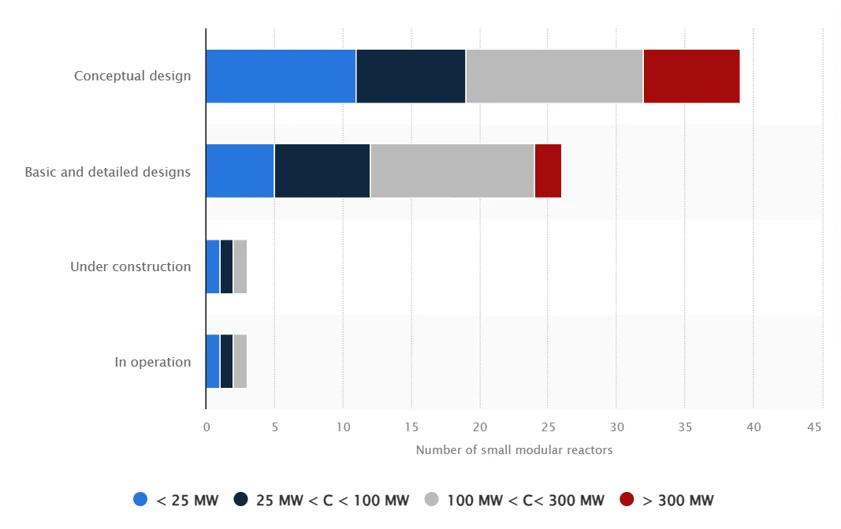
<h5><span style="font-size: 18px;">Nuclear power is of course carbon-free, but it is not “renewable”. Rooted on the need for its cheap continuous power, the emergence of AI has opened the debate for the policy treatment of Nuclear Energy and the new SMRs.</span></h5>
<p> </p>
<p><span style="font-size: 16px;"><img src="https://static.ucraft.net/fs/ucraft/userFiles/feudunord/uploaded-media/nuclar-power-smrs-status-17347861445422.webp" alt="Small Nuclear Reactors, Number of Units and Status" width="841" height="529" data-width="841" data-height="529"></img></span></p>
<p> </p>
<p><span style="font-size: 14px;">Source: Statista, Small Modular Reactors, number and status.</span></p>
<p> </p>
<h4><span style="font-family: var(--p-font-family); letter-spacing: var(--p-letter-spacing);"><span style="color: #236fa1;">We can keep investing on AI with confidence</span></span></h4>
<h4> </h4>
<h4><span style="font-size: 18px; color: var(--p-color); font-family: var(--p-font-family); font-weight: var(--p-font-weight); letter-spacing: var(--p-letter-spacing);">Bottom line; AI Investments are fully aligned with the principles of responsible investing (PRI) and they will also generate positive collateral effects in the economy.</span></h4>
<p> </p>
<p><span style="font-size: 18px; color: var(--p-color); font-family: var(--p-font-family); font-weight: var(--p-font-weight); letter-spacing: var(--p-letter-spacing); background-color: #f1c40f;">THE AI CASE</span></p>
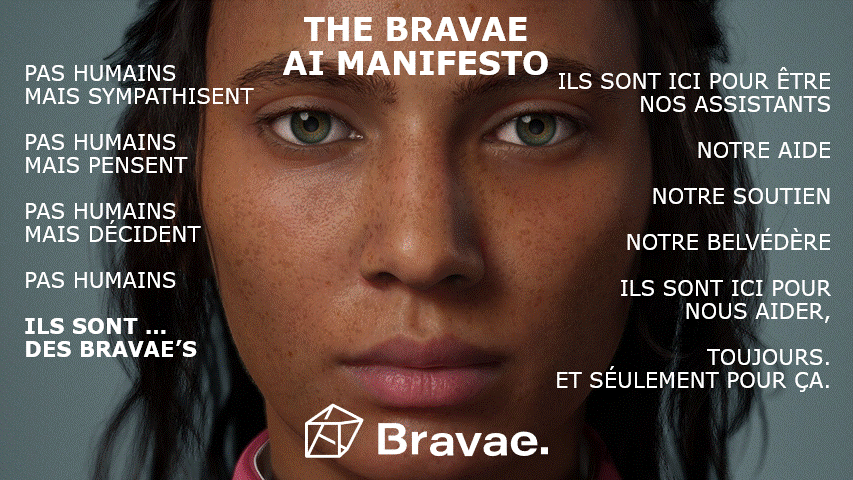
<p><span style="color: #000000; background-color: #f1c40f; font-size: 18px;"><strong>Bravae.com </strong>our latest investment on AI and VR, provides the new “<strong>Bravae’s</strong>” – AI Agents that are trained as Work Assistants with VR hyper-realistic look and interactive environments.</span></p>
<p> </p>
<p><span style="color: #000000; background-color: #f1c40f;"><img src="https://static.ucraft.net/fs/ucraft/userFiles/feudunord/uploaded-media/the-bravae-ai-manifesto-fr-17347864316201.gif" alt="The BRAVAE Manifesto" width="853" height="480" data-width="853" data-height="480"></img></span></p>
<p> </p>
<p> </p>
<p> </p>]]>
            </summary>
                            <link rel="enclosure" href="https://static.ucraft.net/fs/ucraft/userFiles/feudunord/images/a-27-portada-green-ai-1734786835654.jpg" length="732314" type="image/jpeg" />
                        <category term="PRIVATE EQUITY" />
            <updated>2024-12-21T13:19:03+00:00</updated>
                            <dc:description><![CDATA[According to some views AI would be against or even a barrier to ESG’s an climate-change fight. But does it really the case? Clearly not.]]></dc:description>
                    </entry>
            <entry>
            <title><![CDATA[Corporate-Sponsored Funds]]></title>
            <link rel="alternate" href="https://www.feudunord.com/blog/private-equity-2/corporate-sponsored-funds" />
            <id>https://www.feudunord.com/blog/private-equity-2/corporate-sponsored-funds</id>
            <author>
                <name><![CDATA[Manuel Alinque]]></name>
                                    <email><![CDATA[manuel.alinque@gmail.com]]></email>
                            </author>
            <summary type="html">
                <![CDATA[<h2 style="font-size: 18px; text-align: justify;"><span style="font-family: 'Open Sans'; font-size: 32px; color: #e67e23;">Corporate-Sponsored Funds</span></h2>
<p> </p>
<h2 style="font-size: 18px; text-align: justify;"><span style="font-family: 'Open Sans'; font-size: 24px; color: #e67e23;">Strategic Objectives</span></h2>
<h2 style="font-size: 18px; text-align: justify;"> </h2>
<h2 style="font-size: 18px; text-align: justify;"><span style="font-family: 'Open Sans'; font-size: 18px;">While securing good financing and seeking the right capital and debt structure on the balance sheet is a fundamental issue for any multinational corporation, it is even more important to get it right the selection and management of the core business and its returns.</span><br><span style="font-family: 'Open Sans'; font-size: 18px;"> </span><br><span style="font-family: 'Open Sans'; font-size: 18px;">In the search for profitable growth among the core business activities and lines of business, it would be helpful to make the most of all the strategic knowledge that the Multinationa has, both internal and, above all, of the market and the value chain as a whole: What if we could drive the transformation of our customers, distributors, suppliers and key technologies or capabilities, without having to put our balance sheet at risk or alter the structure of our core business?</span><br><span style="font-family: 'Open Sans'; font-size: 18px;"> </span><br><span style="font-family: 'Open Sans'; font-size: 18px;">There is a strategy for doing so; co-investing in the ecosystem of suppliers, distributors and customers by participating in Corporate-Sponsored Funds.</span></h2>
<p style="text-align: justify;"> </p>
<p style="text-align: justify;"><span style="font-family: 'Open Sans'; font-size: 24px; color: #e67e23;">Implications for the Multinational Corporation</span></p>
<p style="text-align: justify;"> </p>
<p style="text-align: justify;"><span style="font-family: 'Open Sans'; font-size: 18px;">These funds take the form of any other private equity fund, except in several important respects:</span><br><span style="font-family: 'Open Sans'; font-size: 18px;"> </span><br><span style="font-family: 'Open Sans'; font-size: 18px;">- The fund management team is partially affiliated with the multinational.</span><br><span style="font-family: 'Open Sans'; font-size: 18px;">- The multinational contributes minority capital to the fund, always less than control.</span><br><span style="font-family: 'Open Sans'; font-size: 18px;">- However, the investment objectives of the Fund are defined by the Multinational, according to its vision of the evolution of the market in which it operates and its supplier/customer typology needs.</span><br><span style="font-family: 'Open Sans'; font-size: 18px;"> </span><br><span style="font-family: 'Open Sans'; font-size: 24px; color: #e67e23;">Interest for Private Equity Investors</span></p>
<p style="text-align: justify;"> </p>
<p style="text-align: justify;"><span style="font-family: 'Open Sans'; font-size: 18px;">Professional private equity, financial PE funds, participate with majority contributions, together with other institutional investors, adhering to the investment objectives of the Multinational:</span><br><span style="font-family: 'Open Sans'; font-size: 18px;"> </span><br><span style="font-family: 'Open Sans'; font-size: 18px;">- For PEs, this strategy gives them privileged access to the business strategies of a multinational group in the fund's sector.</span><br><span style="font-family: 'Open Sans'; font-size: 18px;">- This guarantee of industry knowledge and proven sector leadership translates into a reduction of investment risk.</span><br><span style="font-family: 'Open Sans'; font-size: 18px;">- The expected returns are equivalent to or higher than any other PE investment, and the usual PE investment techniques can be used; acquisitions can be leveraged, etc.</span><br><span style="font-family: 'Open Sans'; font-size: 18px;">- Similarly, investment terms can be standard with 5 years as a target point.</span><br><span style="font-family: 'Open Sans'; font-size: 18px;"> </span></p>
<p style="text-align: justify;"><span style="font-family: 'Open Sans'; font-size: 24px; color: #e67e23;">Joint Governance</span></p>
<p style="text-align: justify;"> </p>
<p style="text-align: justify;"><span style="font-family: 'Open Sans'; font-size: 18px;">The fund's Investment Committee is advised by representatives of the multinational, PEs, and other experts, in addition to the Fund Management Team.</span><br><span style="font-family: 'Open Sans'; font-size: 18px;"> </span><br><span style="font-family: 'Open Sans'; font-size: 18px;">The natural exit from the investment, which is fundamental for Private Equity, may be the sale to another fund, Secondary PE, or to one of the Industrial players and incumbents.</span><br><span style="font-family: 'Open Sans'; font-size: 18px;"> </span><br><span style="font-family: 'Open Sans'; font-size: 18px;">In this sense, for the success of the strategic operation, it is essential that, in the Fund's regulatory bases, the Multinational has the capacity to "veto" who the company in which it has invested via the CSF is going to be sold to.</span><br><span style="font-family: 'Open Sans'; font-size: 18px;"> </span><br><span style="font-family: 'Open Sans'; font-size: 24px; color: #e67e23;">Differences with Corporate-Venture Capital (CVC's)</span></p>
<p style="text-align: justify;"> </p>
<p style="text-align: justify;"><span style="font-family: 'Open Sans'; font-size: 18px;">Corporate-Sponsored Funds (CSFs) have their predecessor in CVCs, Corporate Venture Capital, venture capital funds whose purpose is to invest in early stage disruptive technologies for the sector and to participate in the innovation environment.</span><br><span style="font-family: 'Open Sans'; font-size: 18px;"> </span><br><span style="font-family: 'Open Sans'; font-size: 18px;">CSFs, however, do not pursue disruption "per se", but rather influence and anticipate the environment of suppliers, distributors and customers that favours the multinational's strategy. From the establishment of nearby suppliers of certain critical products to the creation of distribution channels in certain regions, or the creation of alliances with key capabilities for the multinational group.</span></p>
<p style="text-align: justify;"> </p>
<p style="text-align: justify;"><span style="font-family: 'Open Sans'; font-size: 24px; color: #e67e23;">In a nutshell</span></p>
<p style="text-align: justify;"> </p>
<p style="text-align: justify;"><span style="font-family: 'Open Sans'; font-size: 18px;">CSFs always invest in relation to the Multinational's Strategic Objectives for its ecosystem of customers and suppliers. And they do so without putting the Multinational's Balance Sheet at risk, or taking focus away from the core business. They are Private Equity Funds "affiliated" to the Multinational but without accounting consolidation in the Multinational. For professional Venture Capital (Private Equity Funds and other investors) it is an incentive to be able to access sector leadership strategies that reduce the risk of investments without compromising the expected return. This strategy requires managers "like-minded" to the Multinational to define and coordinate the execution of investments with the different governing bodies.</span><br><span style="font-family: 'Open Sans'; font-size: 18px;">Among the sectors where this strategy is already being practised are the Insurance, IT-Hardware and Energy sectors. However, given the complexity of finding coordination between multinationals, with all its complexities of internal governance and professional investors, CSF is a strategy still largely to be discovered and exploited, but one that will become increasingly important to support sustainability and compliance with new ESG, digital transformation and productivity requirements. </span><br><span style="font-family: 'Open Sans'; font-size: 18px;"> </span><br><span style="font-family: 'Open Sans'; font-size: 24px; color: #e67e23;">For more information, </span></p>
<p style="text-align: justify;"> </p>
<p style="text-align: justify;"><span style="font-family: 'Open Sans'; font-size: 18px;"><strong>Feu-du-Nord Investments</strong>, please direct your enquiries to: <span style="color: #e67e23;">investor.relations@feudunord.com</span></span><br><span style="font-family: 'Open Sans'; font-size: 18px;">In accordance with our policies, all communication is always treated with the utmost confidentiality by default. </span></p>]]>
            </summary>
                            <link rel="enclosure" href="https://static.ucraft.net/fs/ucraft/userFiles/feudunord/images/a-26-multinational-agreement-17229443084072.png" length="1624532" type="image/png" />
                        <category term="PRIVATE EQUITY" />
            <updated>2024-08-06T11:38:29+00:00</updated>
                            <dc:description><![CDATA[Corporate-Sponsored Funds, Or how to Transform from the Multinational the ecosystem of Customers, Distributors and Suppliers, while protecting the Core Business and the Balance Sheet of the Company.]]></dc:description>
                    </entry>
            <entry>
            <title><![CDATA[The Long Tail of the SME&#039;s]]></title>
            <link rel="alternate" href="https://www.feudunord.com/blog/strategy-2/the-long-tail-of-the-smes" />
            <id>https://www.feudunord.com/blog/strategy-2/the-long-tail-of-the-smes</id>
            <author>
                <name><![CDATA[Manuel Alinque]]></name>
                                    <email><![CDATA[manuel.alinque@gmail.com]]></email>
                            </author>
            <summary type="html">
                <![CDATA[<p style="font-size: 18px; text-align: justify;"> </p>
<p style="text-align: justify;"><span style="font-family: Raleway; font-size: 18px;">Many of the sectors in which our SMEs compete are made up of a group of five or six companies, often subsidiaries of multinational groups (with some exceptions of large family businesses) that bring together more than half of the company's turnover and total profit. market, and a long list of hundreds of SMEs that are often almost anonymous after many years of operation, maintain modest, stagnant turnover, without dynamism, despite the enormous personal and patrimonial sacrifice that it entails for their owners to move them forward every day. And that is a problem, both for the competitiveness of the economy, and of course for the small owners of the SME base.</span></p>
<p style="text-align: justify;"> </p>
<p style="text-align: justify;"><span style="font-family: Raleway; font-size: 18px;">Among the most common, and true, reasons are financing difficulties and the amount of regulatory obstacles that our SMEs have to face every day to be able to operate in their sector.</span></p>
<p style="text-align: justify;"> </p>
<p style="text-align: justify;"><span style="font-family: Raleway; font-size: 18px;">However, there are other reasons more attributable to the businessman's own so-called "worldview" of his own activity. Among these other, more hidden, reasons that represent barriers or large loads that heel and prevent progress and growth are often found:</span></p>
<p style="text-align: justify;"> </p>
<p><span style="font-family: Raleway; font-size: 18px;">1. Absence of good management accounting, and confusion of personal assets with business assets. Sometimes looking for optimization or tax loopholes. In other cases due to a simple lack of training or will. The point is that quite a few companies operate without really knowing what their "real" profitability, or losses, are. And that prevents any strategic decision making about growth.</span></p>
<p> </p>
<p><span style="font-family: Raleway; font-size: 18px;"><span style="text-align: justify;">2. Lack of knowledge of their own gaming market. Customer acquisition is "already" complex enough, almost a miracle, without considering what my potential customer base is, or looking for a more systematic commercial function. The same thing happens with the competition, which is often only known by the occasions in which it has statistically lost an offer or a competition to another competitor.</span></span></p>
<p> </p>
<p><span style="font-family: Raleway; font-size: 18px;">3. Fear of losing control and "laziness" to professionalize it, to have a more formal government. The owner-manager manages himself in his area of ​​comfort, it is an area that may be complex and with a certain disorder, but it is "my" area, there are no judges, no opinions, no competing visions. There the owner Administrator is the "king". What happens is that there are no new ideas, no critical thinking, and very often the worst, no ambition. The best result is to achieve the best of the last 5 years, whatever it was, and continue paying payroll, loans, suppliers, and take something home. It is a worldview of survival, fully justified by realities and difficulties, but with a high vital price and a high opportunity cost.</span></p>
<p> </p>
<p><span style="font-family: Raleway; font-size: 18px;"><span style="text-align: justify;">4. Lack of SME sectoral and industrial fabric that is technical, associative, and not political, not just another political satellite by and for politics, not for the entrepreneur and for business. Without that activism, without that interaction between SMEs, ambitious ideas and plans are very difficult to flourish.</span></span></p>
<p> </p>
<p><span style="font-family: Raleway; font-size: 18px;">5. Attachment to being essential, whether conscious or unconscious, which influences the view of the employee as a mere tactical resource. Of course this vision is based on the reality of how difficult it is to find truly motivated and generous collaborators, who are not contaminated by the old suspicion of company-employee. It is a vicious circle that is difficult to get out of without a renewal of vision about oneself and the company. Without a team that gives extra and genuine effort it is very difficult to do extraordinary things, and without doing extraordinary things it is very difficult to get out of the hole and grow profitably.</span></p>
<p> </p>
<p><span style="font-family: Raleway; font-size: 18px;">6. Lack of updated and adaptation training. In some cases, the training of the owner and administrator himself is still seen as something that "has already been done", when in reality (good) training must be something continuous and that one knows how to choose to adapt and ideally anticipate future needs.</span></p>
<p style="text-align: justify;"> </p>
<p style="text-align: justify;"><span style="font-family: Raleway; font-size: 18px;">We could continue the list, but it is enough to highlight the importance for the SME to raise its head and think differently. The strategy is basically what we will prioritize and do in the next 30 minutes, and at FEU DU NORD we are always alert to help whoever wants to get out of the long queue.</span></p>
<p style="text-align: justify;"> </p>]]>
            </summary>
                            <link rel="enclosure" href="https://static.ucraft.net/fs/ucraft/userFiles/feudunord/images/a-19-the-long-tail-foto-17169849995191.jpg" length="50962" type="image/jpeg" />
                        <category term="STRATEGY" />
            <updated>2024-05-29T12:49:57+00:00</updated>
                            <dc:description><![CDATA[The concentration of the SME market and the long tail. SME survival. Growth.]]></dc:description>
                    </entry>
            <entry>
            <title><![CDATA[The Products-based Company: Challenges of Expanding into Services/XaaS]]></title>
            <link rel="alternate" href="https://www.feudunord.com/blog/strategy-1/the-products-based-company-challenges-of-expanding-into-servicesxaas" />
            <id>https://www.feudunord.com/blog/strategy-1/the-products-based-company-challenges-of-expanding-into-servicesxaas</id>
            <author>
                <name><![CDATA[Manuel Alinque]]></name>
                                    <email><![CDATA[manuel.alinque@gmail.com]]></email>
                            </author>
            <summary type="html">
                <![CDATA[<p class="ember-view reader-content-blocks__paragraph" style="font-size: 18px;"> </p>
<p id="ember1876" class="ember-view reader-content-blocks__paragraph" style="font-size: 18px;"><span style="font-family: Lato; font-size: 18px;">When the Products in the marketing portfolio mature, and they are increasingly perceived as a commodity by the markets (despite all redesigns and flashy new features added-on from R&amp;D), as if it were part of a curse, their margins narrow, sinking eventually the contribution to worrying levels. When this arrives, eyes fall on the value-added lines, those typically of after-sales, or maintenance, for instance. The logic follows. We need more of this, more « value-added » services.</span></p>
<p class="ember-view reader-content-blocks__paragraph"> </p>
<p id="ember1877" class="ember-view reader-content-blocks__paragraph"><span style="font-family: Lato; font-size: 18px;">After the first steps, sooner than later, we realise it is not so easy. The load that we can put on an average sale for maintenance or any other kind of value-added service has a limit. The immediate phase is then to look beyond the existing portfolio, in a quest to add more value to the client base.</span></p>
<p class="ember-view reader-content-blocks__paragraph"> </p>
<p id="ember1878" class="ember-view reader-content-blocks__paragraph"><span style="font-family: Lato; font-size: 18px;">It is then when the sales force starts to get disoriented with the new guidelines, since the new storytelling is not always neither well explained nor well understood by the incumbents. Usually at this stage the need for a new type of leadership arrives, someone who understands the new world where we want to get into. If this happen (which is not always the case) it means the top executive or shareholder has a clear vision of the limitations of the current organisation.</span></p>
<p id="ember1879" class="ember-view reader-content-blocks__paragraph"><span style="font-family: Lato; font-size: 18px;">But then the challenge is how to transform the anatomy of the current P&amp;L while keeping what is still, despite all problems, the main source of revenues. To create a new Business Division is usually the answer, which comes not without new complexities of cost and revenue allocation, since the end-customer does not care, of course, about what is from one or the other side, inside the supplier processes.</span></p>
<p class="ember-view reader-content-blocks__paragraph"> </p>
<p id="ember1880" class="ember-view reader-content-blocks__paragraph"><span style="font-family: Lato; font-size: 18px;">This is why the first mandate (for any journey or exploration into diversifying and expanding to value-added services, or into any X-as-a-Service model) must be <strong>Customer Centricity</strong>. A common mistake, for instance, is to bring to the marketing and commercial jargon, what is indeed just part of the internal new processes.</span></p>
<p id="ember1881" class="ember-view reader-content-blocks__paragraph"><span style="font-family: Lato; font-size: 18px;">When the first successes of the new Services or XaaS arrive, the company starts realising soon that the current ERP, CRM and Billing systems are not prepared for the new delivery controls needed. Which can eventually make procurement or even client invoicing a burden of manual and clerical work.</span></p>
<p class="ember-view reader-content-blocks__paragraph"> </p>
<p id="ember1882" class="ember-view reader-content-blocks__paragraph"><span style="font-family: Lato; font-size: 18px;">The company knows then somehow that <strong>new systems are needed</strong>, but the detailed functionality associated with any new ERP or IT system is normally still too much unclear to commit relevant new investments on it. Eventually every new sale becomes then a special project internally and the whole organisation starts to question about the beauty of the new strategy which seems to add distortion and noise to the previous peaceful life.</span></p>
<p class="ember-view reader-content-blocks__paragraph"> </p>
<p id="ember1883" class="ember-view reader-content-blocks__paragraph"><span style="font-family: Lato; font-size: 18px;">This is a critical point, where <strong>cultural transformation</strong> needs to be well understood and managed.</span></p>
<p class="ember-view reader-content-blocks__paragraph"> </p>
<p id="ember1884" class="ember-view reader-content-blocks__paragraph"><span style="font-family: Lato; font-size: 18px;">To add more « fun », <strong>new contractual terms</strong>, both legal and financial, arrive as a consequence of financing the new « as-a-service » modes and eventually longer-terms commitments. <strong>New partnerships</strong>and alliances bloom, also, and the whole transit can eventually seems a real mess.</span></p>
<p class="ember-view reader-content-blocks__paragraph"> </p>
<p id="ember1885" class="ember-view reader-content-blocks__paragraph"><span style="font-family: Lato; font-size: 18px;">Some companies can then withdraw the change, or resign themselves and go back to their product-core. Others understand that the organic transformation is not enough and decide to <strong>acquire some new capabilities and skills in the form of M&amp;A</strong>, which in turn put also brand new challenges of <strong>cultural fit and business-case synergies</strong> into the table.</span></p>
<p id="ember1886" class="ember-view reader-content-blocks__paragraph"><span style="font-family: Lato; font-size: 18px;">At this stage investments are committed and eventually there is no way back. Some will survive the transformation (as Microsoft or Atlas Copco did, to mention just a couple from very different industries), others will gradually die.</span></p>
<p class="ember-view reader-content-blocks__paragraph"> </p>
<p id="ember1887" class="ember-view reader-content-blocks__paragraph"><span style="font-family: Lato; font-size: 18px;">The lesson is clear. The migration into the fields of bringing more value to our customers is at the same time risky and perhaps mandatory, but it needs to be done with a good guide and route-map, and a <strong>good anticipation</strong> of business, organisational, financial and contractual risks. A good strategy for scaling-up existing capabilities to prepare for change when it arrives. And a clear mindset for the cultural change that needs to be undertaken. The paradise, Ithaca, is there, but not without risks.</span></p>
<p class="ember-view reader-content-blocks__paragraph"> </p>
<p id="ember1888" class="ember-view reader-content-blocks__paragraph"><span style="font-family: Lato; font-size: 18px;"><strong>Like Ulysses sailing to Ithaca, if you expand into Services, anticipate the risks</strong>, get a good skipper, a good crew and a sea chart, and fasten yourself tight to the mast :)</span></p>
<p class="ember-view reader-content-blocks__paragraph"> </p>]]>
            </summary>
                            <link rel="enclosure" href="https://static.ucraft.net/fs/ucraft/userFiles/feudunord/images/a-11-oqtafyt5ktw.jpg" length="131824" type="image/jpeg" />
                        <category term="STRATEGY" />
            <updated>2024-03-12T19:21:33+00:00</updated>
                            <dc:description><![CDATA[STRATEGY. For the Products-based company expanding into Services can be at the same time a must and a journey. A change full of challenges that will need to be properly managed to deliver the benefits of this strategy.]]></dc:description>
                    </entry>
    </feed>